Propionyl chloride → HCID 20293163, compound
Reaction equation

[CH2:1]([O:8][C:9]1[C:18]2[O:17][CH2:16][CH2:15][O:14][C:13]=2[C:12]([NH2:19])=[CH:11][CH:10]=1)[C:2]1[CH:7]=[CH:6][CH:5]=[CH:4][CH:3]=1.[C:20](Cl)(=[O:23])[CH2:21][CH3:22]>C(Cl)(Cl)Cl.C(N(CC)CC)C>[CH2:1]([O:8][C:9]1[C:18]2[O:17][CH2:16][CH2:15][O:14][C:13]=2[C:12]([NH:19][C:20](=[O:23])[CH2:21][CH3:22])=[CH:11][CH:10]=1)[C:2]1[CH:3]=[CH:4][CH:5]=[CH:6][CH:7]=1Participants
5
Reactant 2
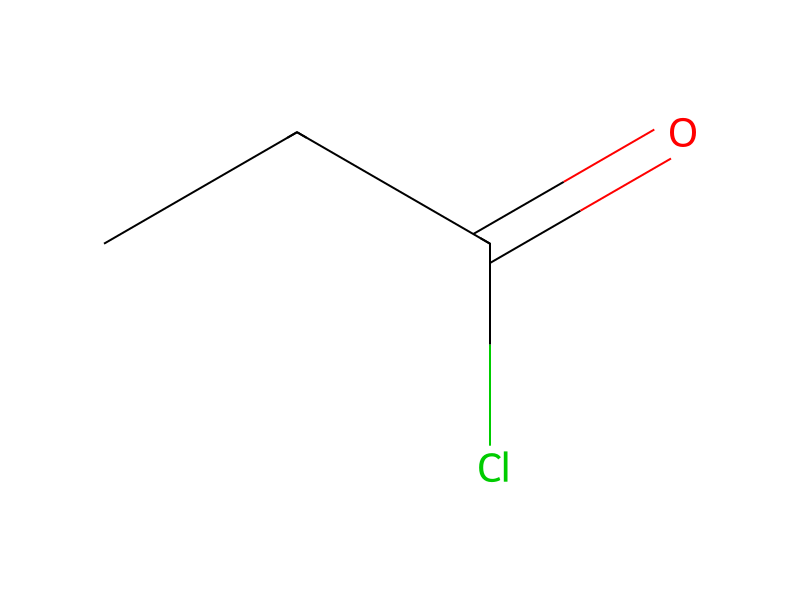

Product 1

Reagents, catalysts & solvents 2


Procedure
To a solution of 30 g of 5-benzyloxy-8-amino-1,4-benzodioxane (XX); code number 760 727, in 250 ml of chloroform and 21.3 ml of triethylamine, cooled to 0° C., 12.1 cm3 of propionyl chloride were slowly added. Then, it was stirred for 17 hours, washed with a solution of diluted hydrochloric acid, with water, with an aqueous solution of sodium bicarbonate, then with water, the organic phase was evaporated and the residue recrystallized in ethyl acetate.
Workup
- washwashed with a solution of diluted hydrochloric acid, with water, with an aqueous solution of sodium bicarbonate
- customwith water, the organic phase was evaporated
- customthe residue recrystallized in ethyl acetate
Sources & evidence
- ORD record
- ord-b2f3a427bbe245ce97e3cc219783cedd
- Source dataset
- uspto-grants-1981_02
- Patent number
- US04248788
Reaction notes
Loading…