Epibromohydrin → 3-Methyl-5-[2-(2,3-epoxypropoxy)-styryl]-isoxazole
Reaction equation

[H-].[Na+].[CH3:3][C:4]1[CH:8]=[C:7]([CH:9]=[CH:10][C:11]2[CH:16]=[CH:15][CH:14]=[CH:13][C:12]=2[OH:17])[O:6][N:5]=1.[H][H].[CH2:20]([CH:22]1[O:24][CH2:23]1)Br>CS(C)=O>[CH3:3][C:4]1[CH:8]=[C:7]([CH:9]=[CH:10][C:11]2[CH:16]=[CH:15][CH:14]=[CH:13][C:12]=2[O:17][CH2:20][CH:22]2[O:24][CH2:23]2)[O:6][N:5]=1Participants
6
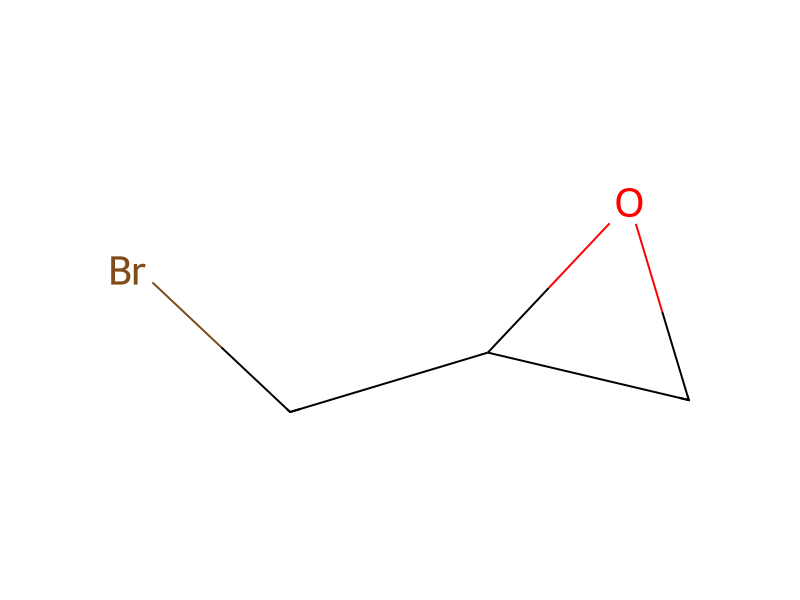





Procedure
6.44 g of 55% strength sodium hydride in paraffin oil (0.15 mole) are introduced into 200 ml of absolute dimethylsulfoxide and 30 g (0.15 mole) of 3-methyl-5-(2-hydroxystyryl)-isoxazole, dissolved in 50 ml of dimethylsulfoxide, are added dropwise at room temperature. When the evolution of hydrogen has ceased, 20.2 g (0.15 mole) of epibromohydrin are added dropwise and the reaction mixture is stirred for 20 hours at room temperature. The mixture is then poured onto 1.5 liters of ice water and the solid precipitate is filtered off and recrystallized from isopropanol. 26.2 g (68% of theory) of colorless crystals, melting point 99°-100° C.
Workup
- additionare added dropwise at room temperature
- filtrationthe solid precipitate is filtered off
- customrecrystallized from isopropanol
Sources & evidence
- ORD record
- ord-80da21076aab482995194cc490b43895
- Source dataset
- uspto-grants-1981_02
- Patent number
- US04251539
Reaction notes
Loading…