Diethyl Malonate → 2-ethenylcyclopropane-1,1-dicarboxylic acid
Reaction equation

[OH-].[K+].[CH2:3](Cl)/[CH:4]=[CH:5]/[CH2:6]Cl.[C:9]([O:17]CC)(=[O:16])[CH2:10][C:11]([O:13]CC)=[O:12].[Cl-].C(C([NH3+])(C(=O)CCCCCCC)C(=O)CCCCCCC)(=O)CCCCCCC>C(Cl)Cl>[CH:4]([CH:5]1[CH2:6][C:10]1([C:9]([OH:17])=[O:16])[C:11]([OH:13])=[O:12])=[CH2:3]Participants
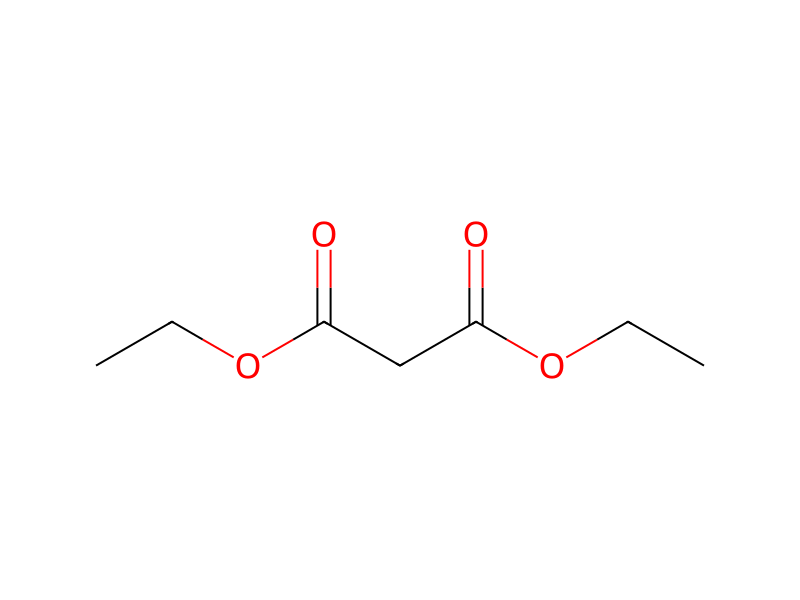




Procedure
A reaction similar to that described in Example 6 was carried out using solid KOH on a larger scale as follows: To a stirred solution of 550 g (4.4 mol) trans 1,4-dichlorobutene-2, 640 g (4.0 mol) diethyl malonate, 80.7 g tricaprylylmethylammonium chloride in 2.4 liters methylene chloride were added over a one-hour period in small portions 498.7 g (8.0 mol) solid potassium hydroxide flakes (90%). The reaction was then heated to reflux for one hour. Potassium salts were removed by successive additions of water to the reaction mixture and siphoning off the aqueous layer until a total of 1.8 liters of water was added. The organic layer was dried over anhydrous sodium sulfate, filtered, concentrated and distilled at reduced pressure. The diethyl ester of 2-vinylcyclopropane-1,1-dicarboxylic acid was obtained in 76.8% yield.
Workup
- customA reaction similar to
- temperatureThe reaction was then heated
- temperatureto reflux for one hour
- customPotassium salts were removed by successive additions of water to the reaction mixture
- additionwas added
- dry with materialThe organic layer was dried over anhydrous sodium sulfate
- filtrationfiltered
- concentrationconcentrated
- distillationdistilled at reduced pressure
Sources & evidence
- ORD record
- ord-cba4c18c7b634fbe80b1b2fea51258bd
- Source dataset
- uspto-grants-1981_02
- Patent number
- US04252739
Reaction notes
Loading…