Ammonia → 4-Styrylphenylamine
Reaction equation

[CH:1]([C:9]1[CH:14]=[CH:13][C:12](S([O-])(=O)=O)=[CH:11][CH:10]=1)=[CH:2][C:3]1[CH:8]=[CH:7][CH:6]=[CH:5][CH:4]=1.[Na+].[NH2-:20].[Na+].N>>[NH2:20][C:12]1[CH:13]=[CH:14][C:9]([CH:1]=[CH:2][C:3]2[CH:8]=[CH:7][CH:6]=[CH:5][CH:4]=2)=[CH:10][CH:11]=1Participants
4



Procedure
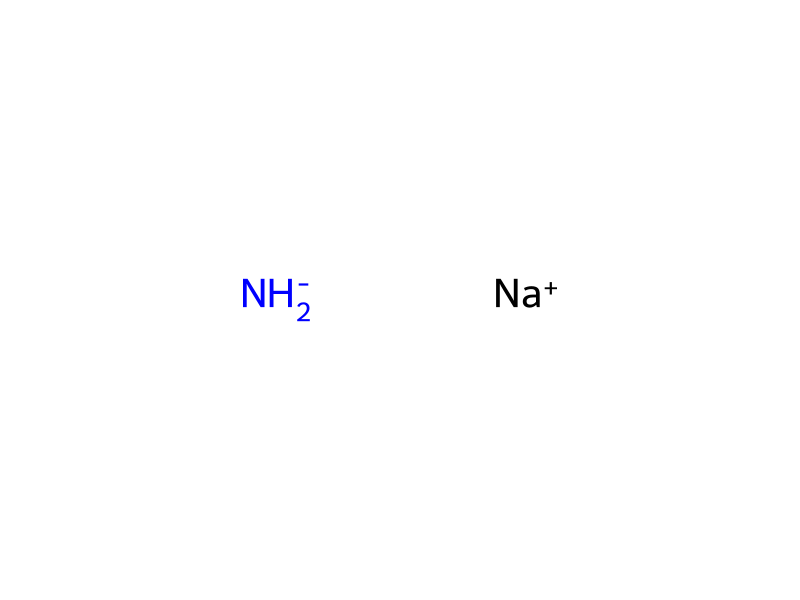
In a 200-ml autoclave were placed 18.6 grams (0.06 mole) of anhydrous sodium p-styrylbenzene sulfonate, 5.2 grams (0.13 mole) of sodium amide and 50 ml of liquid ammonia in the same manner as in Example 1. The resultant mixture was heated at 120° C for 6 hours. The reaction pressure in the autoclave was 90 atm. during the reaction. After the ammonia was removed, 10 ml of water was added to the reaction mixture for hydrolysis. The product was extracted with ether and the ether was distilled off to produce crude 4-aminostilbene. The recrystallization thereof from ethanol gave 11.9 grams of 4-aminostilbene having a melting point of 151° to 152° C. Yield was 88.5%.
Workup
- customThe reaction pressure in the autoclave
- customduring the reaction
- customAfter the ammonia was removed
- addition10 ml of water was added to the reaction mixture for hydrolysis
- extractionThe product was extracted with ether
- distillationthe ether was distilled off
- customto produce crude 4-aminostilbene
- customThe recrystallization
Sources & evidence
- ORD record
- ord-f76d50521b3e406ab3806b3a917fbcc8
- Source dataset
- uspto-grants-1977_01
- Patent number
- US04001313
Reaction notes
Loading…