Water → 4-Chloro-5-(1-methylhydrazinyl)-2-[3-(trifluoromethyl)phenyl]-3(2H)-pyridazinone
Reaction equation

[Cl:1][C:2]1[C:3](=[O:19])[N:4]([C:9]2[CH:14]=[CH:13][CH:12]=[C:11]([C:15]([F:18])([F:17])[F:16])[CH:10]=2)[N:5]=[CH:6][C:7]=1Cl.[CH3:20][NH:21][NH2:22].O>CO>[Cl:1][C:2]1[C:3](=[O:19])[N:4]([C:9]2[CH:14]=[CH:13][CH:12]=[C:11]([C:15]([F:18])([F:17])[F:16])[CH:10]=2)[N:5]=[CH:6][C:7]=1[N:21]([CH3:20])[NH2:22]Participants
5

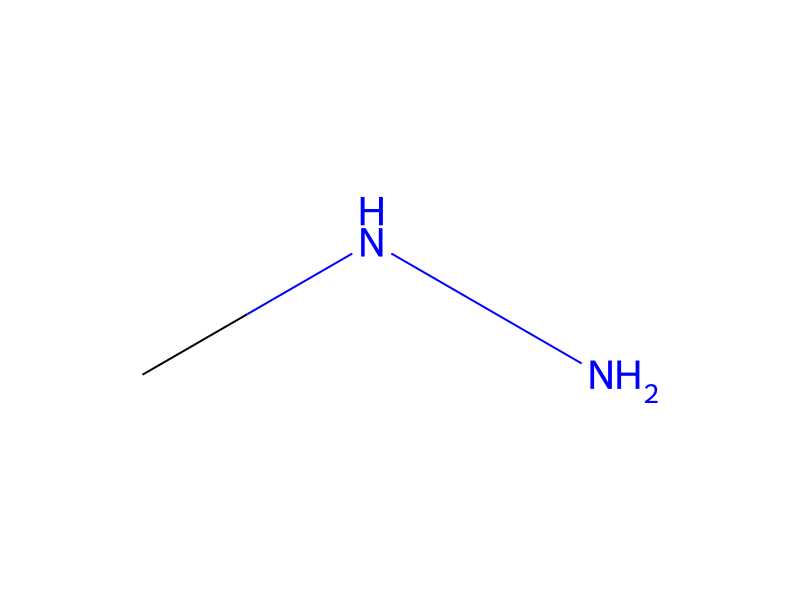



Conditions
- Temperature
- 45 °C
Procedure
To a solution consisting of 15.5 grams of 4,5-dichloro-2-(3-trifluoromethylphenyl)-3(2H)-pyridazinone in 120 grams of methanol is added 9.2 grams methylhydrazine. The reaction mixture is heated to 45° C. for 3 hours, cooled and poured onto 250 grams of water. The resulting precipitate is separated by filtration, washed with water and dried. The solid is crystallized from benzene to yield 4-chloro-5-(1-methylhydrazino)-2-(3'-trifluoromethylphenyl)-3-(2H)-pyridazinone. (m.p. 140° to 141° C. with decomposition).
Workup
- temperaturecooled
- customThe resulting precipitate is separated by filtration
- washwashed with water
- customdried
- customThe solid is crystallized from benzene
Sources & evidence
- ORD record
- ord-1a065bd70b3a4915bce1ef0869822abc
- Source dataset
- uspto-grants-1977_01
- Patent number
- US04004009
Reaction notes
Loading…