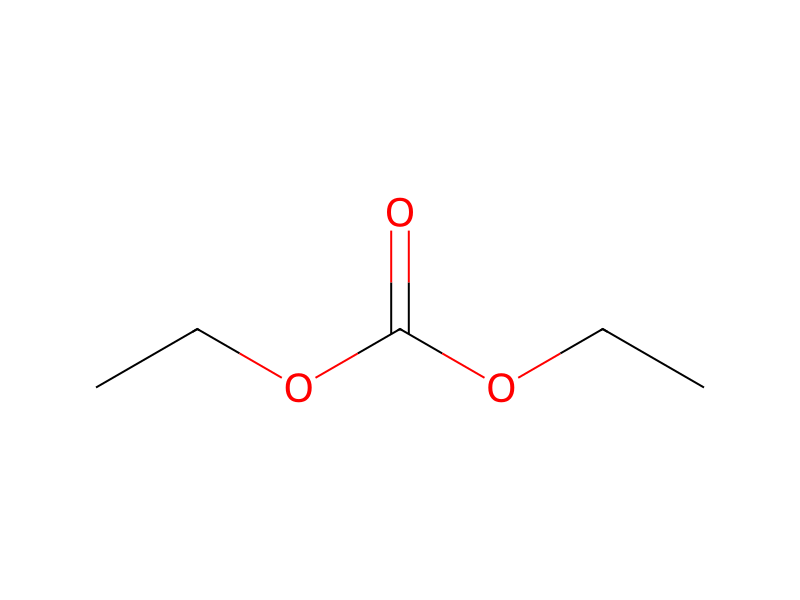
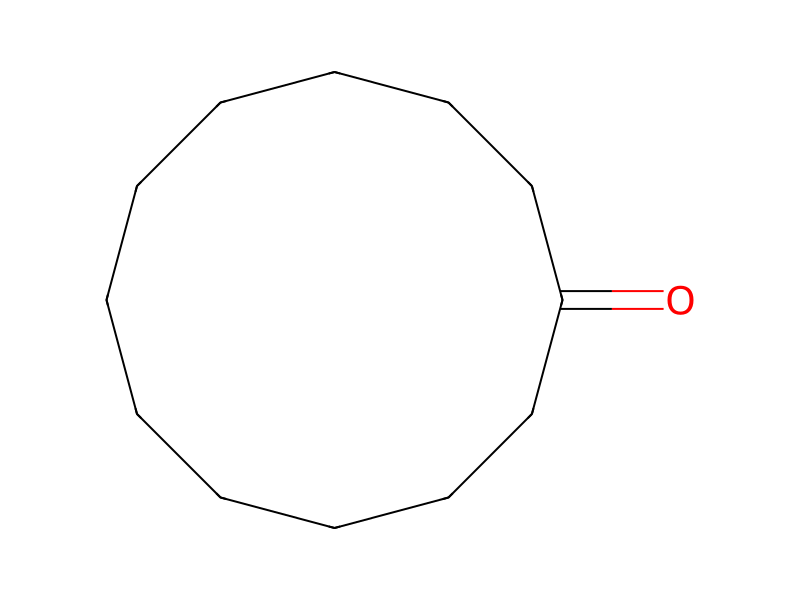
Diethyl Carbonate → Cyclododecanecarboxylic acid, 2-oxo-, ethyl ester
Reaction equation

[C:1]1(=[O:13])[CH2:12][CH2:11][CH2:10][CH2:9][CH2:8][CH2:7][CH2:6][CH2:5][CH2:4][CH2:3][CH2:2]1.[C:14](=O)([O:18]CC)[O:15][CH2:16][CH3:17]>>[C:14]([CH:2]1[CH2:3][CH2:4][CH2:5][CH2:6][CH2:7][CH2:8][CH2:9][CH2:10][CH2:11][CH2:12][C:1]1=[O:13])([O:15][CH2:16][CH3:17])=[O:18]Participants
3

Procedure
The inventors have established a more effective method for producing β-(2-oxocyclododecyl)propionic acid by the following steps: reacting cyclododecanone with diethyl carbonate to give carbethoxycyclododecanone, reacting the carboethoxycyclododecanone with β-propiolactone in a solvent having no alkoxy group, such as benzene, toluene and ethyl ether in the presence of sodium hydride, hydrolyzing the resulting product, and then decarboxylating to give β-(2-oxocyclododecyl)propionic acid in high yield (79% based on the starting cyclododecanone theoretically).
Sources & evidence
- ORD record
- ord-39a5c646262b4cfd81bdec568098b549
- Source dataset
- uspto-grants-1977_01
- Patent number
- US04005107
Reaction notes
Loading…