Vanadium → 13573-13-2
Reaction equation

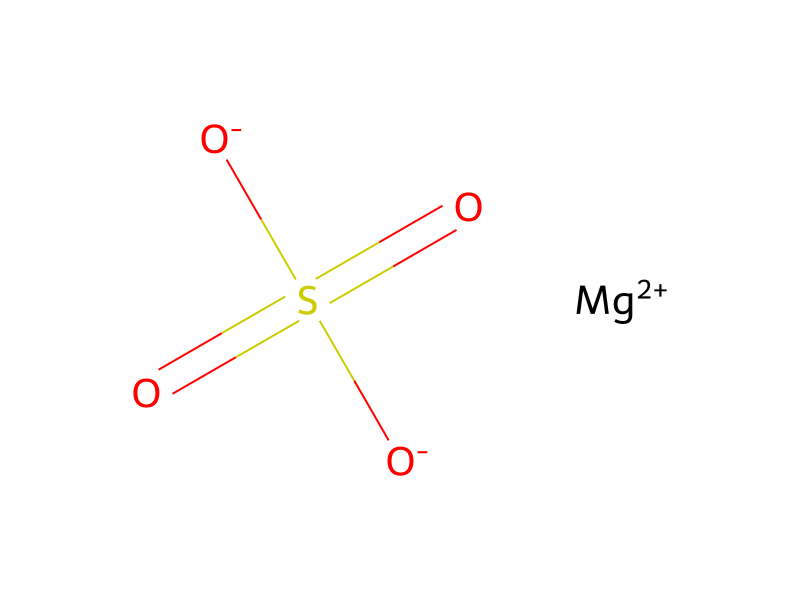
[V:1].[Mg:2].[O-:3]S([O-])(=O)=O.[Mg+2].[O-2:9].[Mg+2]>>[O-2:3].[O-2:9].[O-2:3].[O-2:3].[O-2:3].[O-2:3].[O-2:3].[Mg+2:2].[Mg+2:2].[V:1].[V:1]Participants




Procedure
Early studies of vanadium hot corrosion recognized that the accelerated oxidation associated with the presence of liquid V2O5 could be attenuated if the melting point of the reaction products could be raised above the temperature inside a gas turbine engine. Researchers found that certain compounds, such as metal oxides, react with V2O5 to form refractory vanadates. To date, numerous additives have been evaluated for their effectiveness in inhibiting vanadium hot corrosion. Currently, magnesium-containing compounds (e.g., MgSO4) are widely used in the industry because they can decompose to magnesium oxide (MgO). which in turn reacts with V2O5 to form magnesium vanadate (Mg3 (VO4) 2). Magnesium vanadate has a melting point of 1150° C. For reasons that are not well understood however, MgSO4 is not particularly effective in inhibiting sodium vanadate corrosion. In addition, sulfur, such as from sodium sulfates in the compressor and SO2 from the fuel, greatly reduces the effectiveness of the MgO formed from MgSO4 because MgO reacts preferentially with the sulfur to form MgSO4 rather than with V2O5 to form magnesium vanadate.
Workup
- customwhich in turn reacts with V2O5
Sources & evidence
- ORD record
- ord-8f39711cf3db4c359ed8c178516bf285
- Source dataset
- uspto-grants-1999_03
- Patent number
- USRE036117
Reaction notes
Loading…