4-Nitrophenol → 2-[4-(4-Nitrophenoxy)butyl]-1H-isoindole-1,3(2H)-dione
Reaction equation

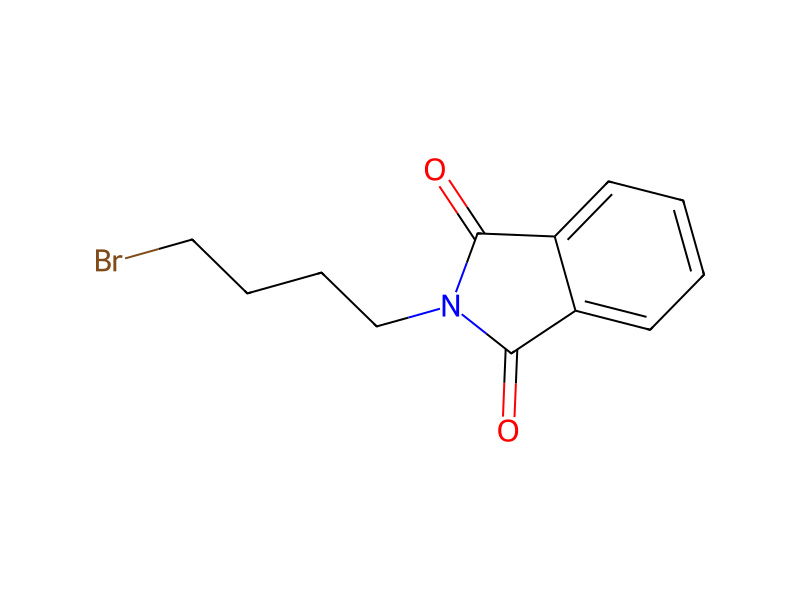
[N+:1]([C:4]1[CH:9]=[CH:8][C:7]([OH:10])=[CH:6][CH:5]=1)([O-:3])=[O:2].C[O-].[Na+].Br[CH2:15][CH2:16][CH2:17][CH2:18][N:19]1[C:27](=[O:28])[C:26]2[C:21](=[CH:22][CH:23]=[CH:24][CH:25]=2)[C:20]1=[O:29]>CN(C)C=O.O>[N+:1]([C:4]1[CH:9]=[CH:8][C:7]([O:10][CH2:15][CH2:16][CH2:17][CH2:18][N:19]2[C:27](=[O:28])[C:26]3[C:21](=[CH:22][CH:23]=[CH:24][CH:25]=3)[C:20]2=[O:29])=[CH:6][CH:5]=1)([O-:3])=[O:2]Participants
6





Procedure
A solution of 14.0 g of 4-nitrophenol in 250 ml of dimethylformamide is treated with 6.0 g of sodium methoxide. After 15 minutes, 28.2 g of 2-(4-bromobutyl)-1H-isoindole-1,3(2H)-dione is added, and the mixture then stirred at room temperature for 16 hours. The reaction mixture is diluted with 1500 ml of cold water, the precipitated solid collected, washed with water, and dried. Recrystallization from ethanol gives the desired compound, m.p. 112°-114° C.
Workup
- customthe precipitated solid collected
- washwashed with water
- customdried
- customRecrystallization from ethanol
Sources & evidence
- ORD record
- ord-74a52a17b7534358912813f8275fd26b
- Source dataset
- uspto-grants-1999_03
- Patent number
- US05877196
Reaction notes
Loading…