Formaldehyde → 2-((Dimethylamino)methyl)cyclohexanone
Reaction equation

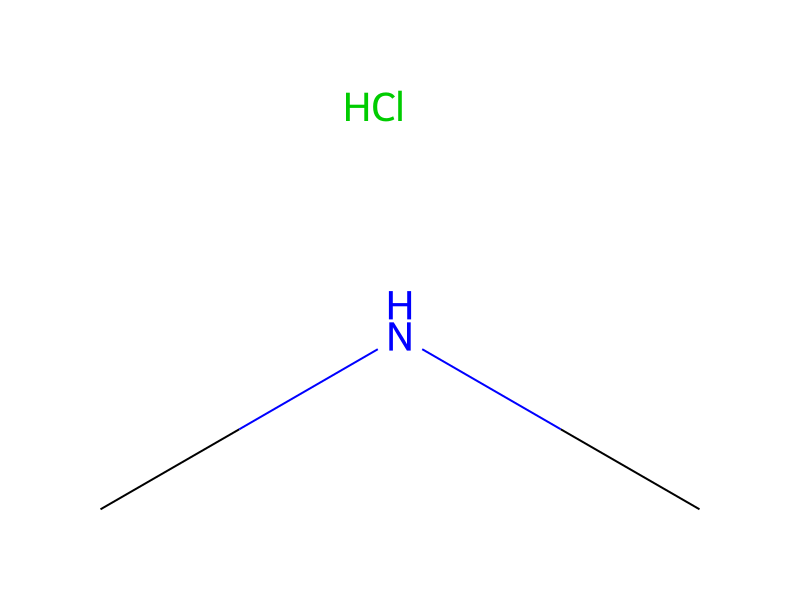
[C:1]1(=[O:7])[CH2:6][CH2:5][CH2:4][CH2:3][CH2:2]1.[CH2:8]=O.Cl.[CH3:11][NH:12][CH3:13]>>[CH3:11][N:12]([CH2:8][CH:2]1[CH2:3][CH2:4][CH2:5][CH2:6][C:1]1=[O:7])[CH3:13]Participants



Procedure
The Mannich base (I) is prepared by reacting cyclohexanone with formaldehyde and dimethylamine hydrochloride to produce the hydrochloride salt of 2-dimethylamino methyl cyclohexanone. Methods of preparing this base are known in the art. For example, Mannich reported a method wherein excess cyclohexanone is reacted with one equivalent each of dimethylamine HCl and formaldehyde. (Ber. 53B, 1874-1880 (1920)). Grunenthal (Tramadol's innovator) reported a method wherein two equivalents of cyclohexanone were reacted with one equivalent each of dimethylamine HCl and formaldehyde, using glacial acetic acid as a solvent. This method used by Grunenthal was reported in the original work on Tramadol published in Arzneimittel-Forsch./Drug Res. Although either of these methods may be used in the inventive process to prepare the Mannich Base, the method of Grunenthal is preferred because it provides higher yields and is more manageable in the laboratory. For best results, the Mannich base hydrochloride is isolated from the Mannich reaction mixture by distillation, preferably vacuum distillation, followed by crystallization. Vacuum distillation was found to be an effective way to remove the impurities such as water, acetic acid and cyclohexanone from the system. Following distillation, acetone is added to the residue to produce a thick slurry. The slurry is cooled, collected and washed with acetone. The wetcake or dried material is then dissolved in water and converted to the free base by addition of 50% NaOH. The free base is extracted into toluene.
Workup
- customThe Mannich base (I) is prepared
Sources & evidence
- ORD record
- ord-ab4380bb9e3846d2a575e3dabb98a77f
- Source dataset
- uspto-grants-1999_03
- Patent number
- US05877351
Reaction notes
Loading…