Ethylene Glycol → 2-(3-Bromophenyl)-1,3-dioxolane
Reaction equation

[Br:1][C:2]1[CH:3]=[C:4]([CH:7]=[CH:8][CH:9]=1)[CH:5]=[O:6].[CH2:10](O)[CH2:11][OH:12].O.C1(C)C=CC(S(O)(=O)=O)=CC=1.O>C1C=CC=CC=1>[O:6]1[CH2:10][CH2:11][O:12][CH:5]1[C:4]1[CH:3]=[C:2]([Br:1])[CH:9]=[CH:8][CH:7]=1Participants
6
Reactant 4


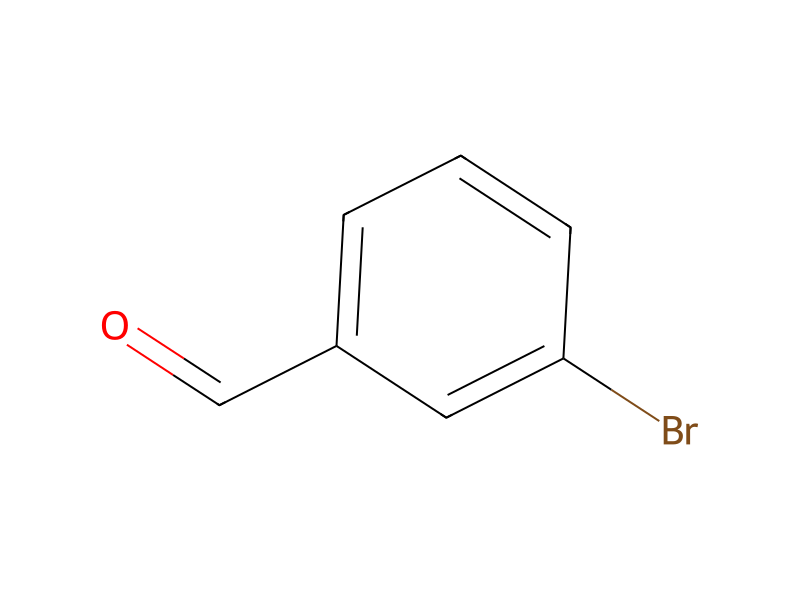

Product 1

Reagents, catalysts & solvents 1

Procedure
A solution of 3-bromobenzaldehyde (15.87 g, 85.78 mmol), 1,2-ethyleneglycol (8.01 g, 128.7 mmol) and p-toluenesulfonic acid hydrate (100 mg ) in benzene (200 ml) was refluxed at 110° C. under nitrogen for 3 hours, and the water formed in the reaction was collected through a Dean Stark trap. The resulting solution was cooled to room temperature, and washed with 10% sodium hydroxide (2×100 ml), water (4×100 ml) and brine (1×100 ml), and dried over magnesium sulfate. Removal of the solvent under reduced pressure gave the title compound as an oily material (16.8 g, 86%).
Workup
- customwas collected through a Dean Stark trap
- washwashed with 10% sodium hydroxide (2×100 ml), water (4×100 ml) and brine (1×100 ml)
- dry with materialdried over magnesium sulfate
- customRemoval of the solvent under reduced pressure
Sources & evidence
- ORD record
- ord-79271cdfa4c14f13826ca35d2b3330ff
- Source dataset
- uspto-grants-1999_03
- Patent number
- US05879894
Reaction notes
Loading…