Benzaldehyde → 1-methoxy-4-(2-nitroethyl)benzene
Reaction equation

Cl.COC1C=CC(C[C@@H]2NC(=N)[C@@H](C)C2)=CC=1.[CH3:18][O:19][C:20]1[CH:25]=[CH:24][C:23]([CH:26]=[CH:27][N+:28]([O-:30])=[O:29])=[CH:22][CH:21]=1.C(=O)C1C=CC=CC=1.NC1C=CC=CC=1N>>[CH3:18][O:19][C:20]1[CH:21]=[CH:22][C:23]([CH2:26][CH2:27][N+:28]([O-:30])=[O:29])=[CH:24][CH:25]=1Participants
5



Procedure
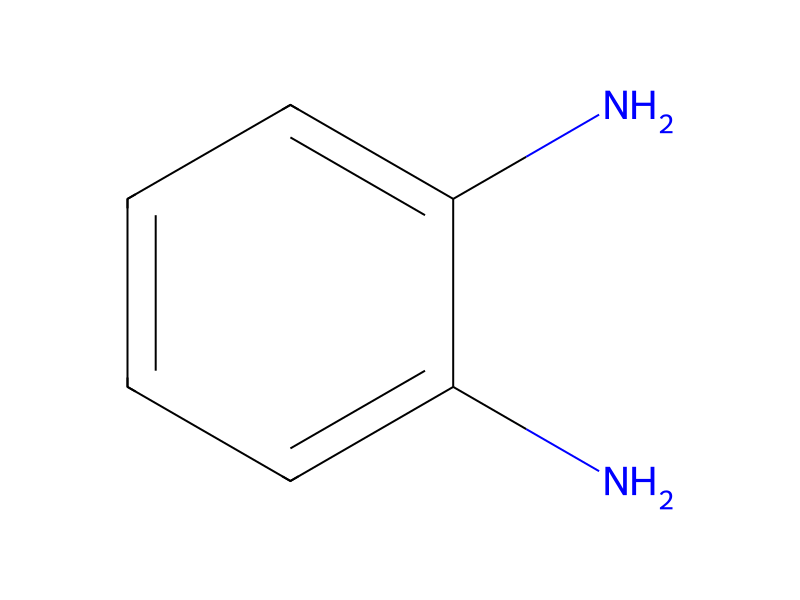
Isomer B: (±) (trans) 5-[(4-methoxyphenyl)methyl]-3-methylpyrrolidin-2-imine, monohydrochloride ##STR232## 227 A) 4-Methoxy-b-nitrostyrene (25.0 g, 0.15 mole) was reacted with benzaldehyde (19.1 g, 0.18 mole) and 1,2-diaminobenzene (19.8 g, 0.18 mole) according to the procedure of Chikashita et. al. (Synth. Commun. 1985, 15 (6), 527) to yield methoxy-4-(2-nitroethyl)benzene (25.0 g, 93%) as a yellow oil.
Sources & evidence
- ORD record
- ord-4102892c3ada495e8d67cdee01656891
- Source dataset
- uspto-grants-1999_03
- Patent number
- US05883251
Reaction notes
Loading…