Triethylamine → 3-(((2R)-1-Methyl-2-pyrrolidinyl)methyl)-N-(3-nitro-2-pyridinyl)-1H-indol-5-amine
Reaction equation

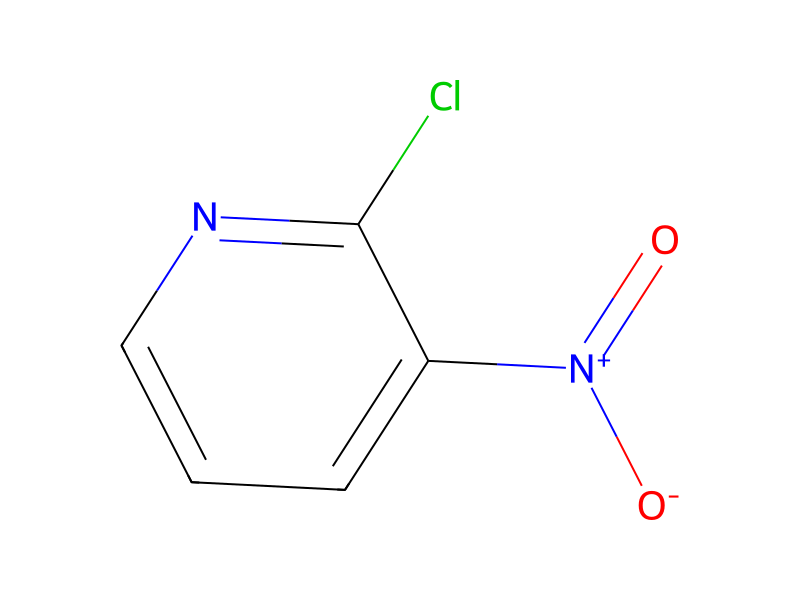
[CH3:1][N:2]1[CH2:6][CH2:5][CH2:4][C@@H:3]1[CH2:7][C:8]1[C:16]2[C:11](=[CH:12][CH:13]=[CH:14][CH:15]=2)[NH:10][CH:9]=1.Cl[C:18]1[C:23]([N+:24]([O-:26])=[O:25])=[CH:22][CH:21]=[CH:20][N:19]=1.C([N:29](CC)CC)C>C(#N)C>[CH3:1][N:2]1[CH2:6][CH2:5][CH2:4][C@@H:3]1[CH2:7][C:8]1[C:16]2[C:11](=[CH:12][CH:13]=[C:14]([NH:29][C:18]3[C:23]([N+:24]([O-:26])=[O:25])=[CH:22][CH:21]=[CH:20][N:19]=3)[CH:15]=2)[NH:10][CH:9]=1Participants




Procedure
(R)-3-(N-Methylpyrrolidin-2-ylmethyl)indole and 2-chloro-3-nitropyridine were used. Triethylamine was used as base, acetonitrile was used as solvent, and the reaction was heated at reflux for 3.5 hours. Chromatography afforded the title compound (81%) as a dark red foam: 1H NMR (CDCl3) δ 10.11 (br s, 1H), 8.52 (dd, J=1.8 and 8.4 Hz, 1H), 8.43 (1.8 and 4.5 Hz, 1H), 8.33 (br s, 1H), 7.77 (d, J=1.7 Hz, 1H), 7.35 (d, J=8.7 Hz, 1H), 7.26 (dd, J=2.0 and 8.6 Hz, 1H), 7.03 (d, J=2.1 Hz, 1H) 6.74 (dd, J=4.4 and 8.4 Hz, 1H), 3.21-3.12 (m, 2H), 2.68-2.2.58 (m, 1H), 2.54-2.46 (m, 1H), 2.47 (s, 3H), 2.28-2.18 (m, 1H), 1.89-1.73 (m, 2H), 1.73-1.54 (m, 2H); 13C NMR (CDCl3) δ 155.7, 151.5, 135.5, 134.3, 129.5, 128.2, 128.1, 123.1, 119.4, 114.3, 113.0, 111.4, 66.7, 57.5, 40.8, 31.5, 29.9, 21.9. Anal. calcd for C19H21N5O2.1/3 H2O: C, 63.85; H, 6.11; N, 19.59. Found: C, 63.86; H, 5.86; N, 19.31.
Workup
- temperaturethe reaction was heated
- temperatureat reflux for 3.5 hours
Sources & evidence
- ORD record
- ord-e276a53c8d4749bcb8d2912924ca293f
- Source dataset
- uspto-grants-1999_03
- Patent number
- US05886008
Reaction notes
Loading…