Isopropanol → HCID 178429770, compound
Reaction equation

[H-].[Na+].[CH3:3][C:4]1([C@@H:7]2[CH2:12][CH2:11][C@H:10]([OH:13])[CH2:9][CH2:8]2)[CH2:6][CH2:5]1.Cl[C:15]1[C:24]2[C:19](=[CH:20][CH:21]=[CH:22][CH:23]=2)[N:18]=[CH:17][N:16]=1.C(O)(C)C>O1CCCC1.O>[CH3:3][C:4]1([C@@H:7]2[CH2:12][CH2:11][C@H:10]([O:13][C:15]3[C:24]4[C:19](=[CH:20][CH:21]=[CH:22][CH:23]=4)[N:18]=[CH:17][N:16]=3)[CH2:9][CH2:8]2)[CH2:5][CH2:6]1Participants
Reactant 4


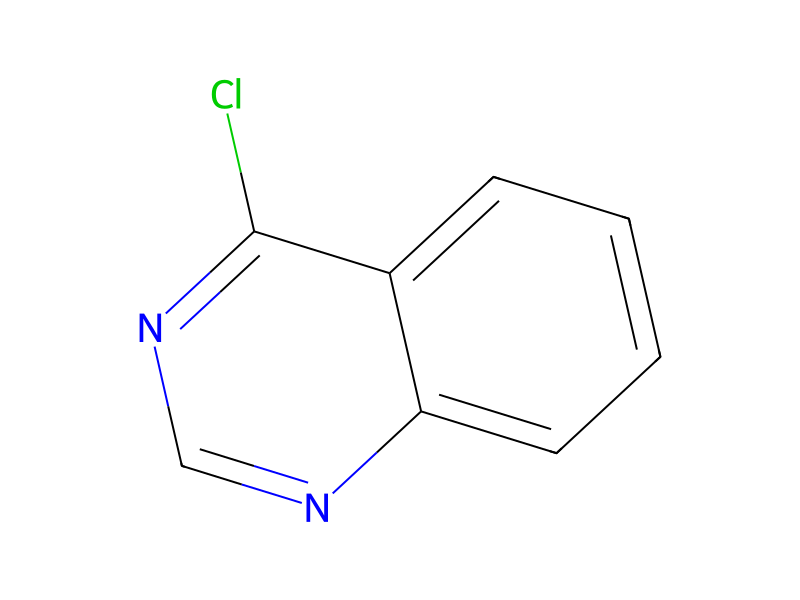

Product 1

Reagents, catalysts & solvents 2


Procedure
0.32 g (10.8 mmol) of sodium hydride (80% dispersion in mineral oil) was added to a solution of 1.7 g (7.9 mmol) of cis-4-(1-methylcyclopropyl)cyclohexanol in 20 ml of tetrahydrofuran, and the mixture was heated under reflux for 3 hours. It was then cooled to room temperature, 1.2 g (7.2 mmol) of 4-chloroquinazoline dissolved in 5 ml of tetrahydrofuran were added, and the mixture was heated under reflux for 2 hours. After cooling to room temperature, isopropanol was added to the reaction solution, which was subsequently stirred for 15 minutes and poured into water, after which extraction was carried out with diethyl ether. The organic phase was dried and concentrated. The residue was purified by chromatography on silica gel with petroleum ether/ethyl acetate 3:1. 1.2 g (62% of theory) were obtained of a colorless oil, which gradually solidified.
Workup
- temperaturethe mixture was heated
- temperatureunder reflux for 3 hours
- additionwere added
- temperaturethe mixture was heated
- temperatureunder reflux for 2 hours
- temperatureAfter cooling to room temperature
- extractionafter which extraction
- customThe organic phase was dried
- concentrationconcentrated
- customThe residue was purified by chromatography on silica gel with petroleum ether/ethyl acetate 3:1
- custom1.2 g (62% of theory) were obtained of a colorless oil, which
Sources & evidence
- ORD record
- ord-564211554ebc4946a1fea94f36a5284a
- Source dataset
- uspto-grants-1999_03
- Patent number
- US05889012
Reaction notes
Loading…