Ammonia → Propyl diphenylphosphinite
Reaction equation

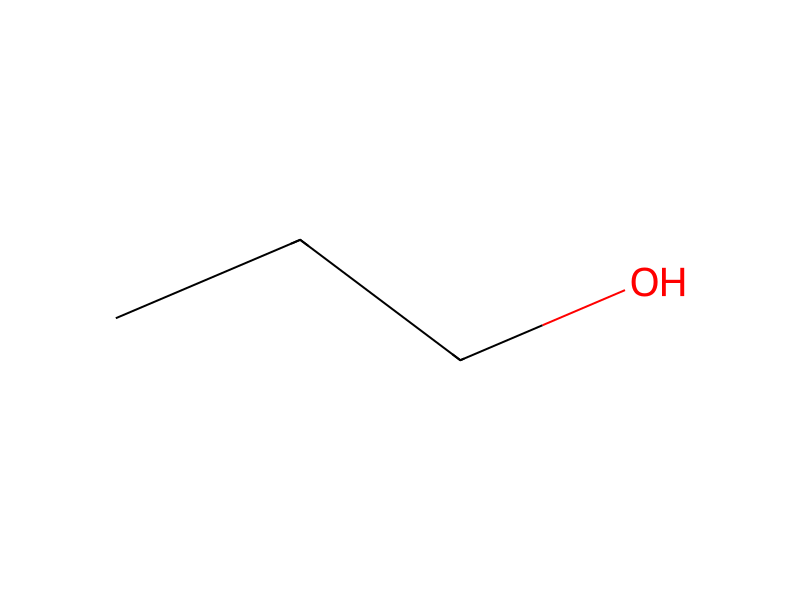
[CH2:1]([OH:4])[CH2:2][CH3:3].Cl[P:6]([C:13]1[CH:18]=[CH:17][CH:16]=[CH:15][CH:14]=1)[C:7]1[CH:12]=[CH:11][CH:10]=[CH:9][CH:8]=1.N>>[C:13]1([P:6]([C:7]2[CH:8]=[CH:9][CH:10]=[CH:11][CH:12]=2)[O:4][CH2:1][CH2:2][CH3:3])[CH:14]=[CH:15][CH:16]=[CH:17][CH:18]=1Participants
4



Procedure
915 g (15.25 mol) of n-propanol are cooled to -15° C. with stirring under a nitrogen atmosphere. 330 g (1.5 mol) of chloro(diphenyl)phosphine are then added dropwise at this temperature with vigorous stirring in one hour and 15 minutes. 38 g (2.24 mol) of ammonia gas are then introduced at this temperature with further vigorous stirring. The mixture is then stirred for a further ten hours without cooling. After filtering off the ammonium chloride by suction, the filtrate is freed from propanol and excess ammonia in vacuo. The remaining residue is distilled (boiling point 122° C. at 0.4 mbar). 230 g of propyl diphenylphosphinite are obtained. This corresponds to a yield of 63% of theory.
Workup
- stirringwith vigorous stirring in one hour and 15 minutes
- stirringThe mixture is then stirred for a further ten hours
- temperaturewithout cooling
- filtrationAfter filtering off the ammonium chloride by suction
- distillationThe remaining residue is distilled (boiling point 122° C. at 0.4 mbar)
Sources & evidence
- ORD record
- ord-98ab22649c024b338047d8383fa98185
- Source dataset
- uspto-grants-2000_06
- Patent number
- US06077968
Reaction notes
Loading…