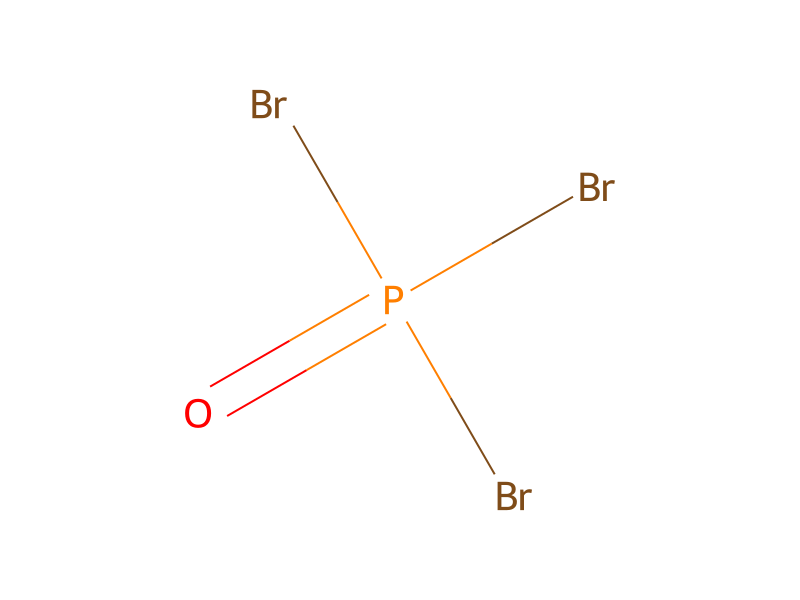
Phosphorus oxybromide → Methyl 5-bromopyrazine-2-carboxylate
Reaction equation

[CH3:1][O:2][C:3]([C:5]1[CH:10]=[N:9][C:8](O)=[CH:7][N:6]=1)=[O:4].P(Br)(Br)([Br:14])=O>CO>[CH3:1][O:2][C:3]([C:5]1[CH:10]=[N:9][C:8]([Br:14])=[CH:7][N:6]=1)=[O:4]Participants
4
Reactant 2

Product 1

Reagents, catalysts & solvents 1

Procedure
A solution of 5-hydroxy-pyrazine-2-carboxylic acid methyl ester (2.56 g, 16.61 mmol) in phosphorous oxybromide 9.9 g, 34.9 mmol) were heated at 90° C. for 70 mins. The reaction was allowed to cool and the resulting solid carefully dissolved in methanol and then the solvent was evaporated in vacuo. The residue was partitioned between EtOAc and sat. NaHCO3 and the organic extracts were washed with brine, dried (Na2SO4) and evaporated in vacuo. The residue was chromatographed (silica gel, EtOAc:Hexanes 40:60) to afford the title compound.
Workup
- temperatureto cool
- customthe solvent was evaporated in vacuo
- customThe residue was partitioned between EtOAc and sat. NaHCO3
- washthe organic extracts were washed with brine
- dry with materialdried (Na2SO4)
- customevaporated in vacuo
- customThe residue was chromatographed (silica gel, EtOAc:Hexanes 40:60)
Sources & evidence
- ORD record
- ord-cce7aef667164276a12bc3a4865c0a95
- Source dataset
- uspto-grants-2000_06
- Patent number
- US06077853
Reaction notes
Loading…