Tyramine → 4-(2-(6-chloro-1-isopropyl-1H-pyrazolo[3,4-d]pyrimidin-4-ylamino)ethyl)phenol
Reaction equation

Cl[C:2]1[N:7]=[C:6]([Cl:8])[N:5]=[C:4]2[N:9]([CH:12]([CH3:14])[CH3:13])[N:10]=[CH:11][C:3]=12.ClC1N=C(I)N=C2C=1N=CN2C(C)C.[NH2:29][CH2:30][CH2:31][C:32]1[CH:37]=[CH:36][C:35]([OH:38])=[CH:34][CH:33]=1>>[Cl:8][C:6]1[N:5]=[C:4]2[N:9]([CH:12]([CH3:14])[CH3:13])[N:10]=[CH:11][C:3]2=[C:2]([NH:29][CH2:30][CH2:31][C:32]2[CH:37]=[CH:36][C:35]([OH:38])=[CH:34][CH:33]=2)[N:7]=1Participants
4
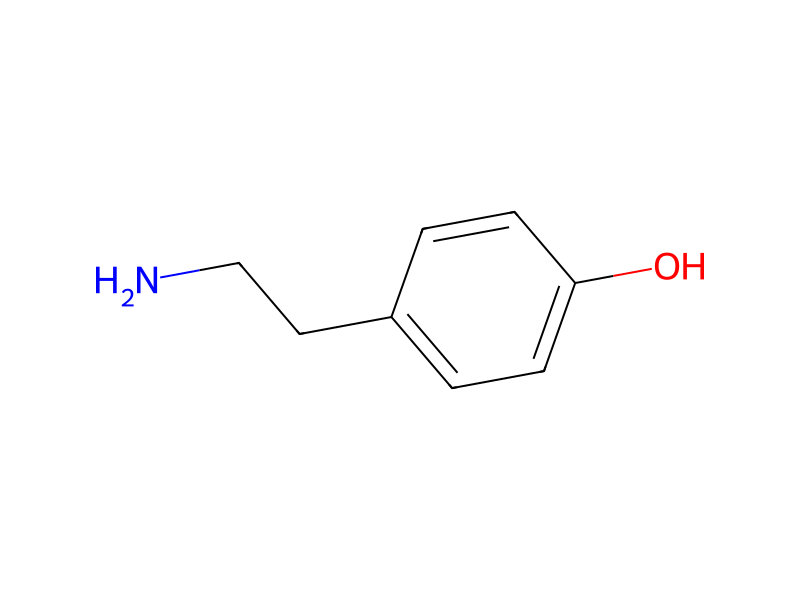


Procedure
Following the procedure of Example 128b, 4,6-dichloro-1-isopropyl-1H-pyrazolo[3,4-d]pyrimidine (U.S. Pat. No. 3,399,196) (a) (0.184 g, 0.795 mmol) was reacted with tyramine. The crude residue was purified by silica gel chromatography (25 to 75% ethyl acetate in hexane eluant) to afford the title compound as a solid. MS m/z 332.1 (M+1).
Workup
- customThe crude residue was purified by silica gel chromatography (25 to 75% ethyl acetate in hexane eluant)
Sources & evidence
- ORD record
- ord-7650ba7e2716462bad044cf604363702
- Source dataset
- uspto-grants-2015_01
- Patent number
- US08927281B2
Reaction notes
Loading…