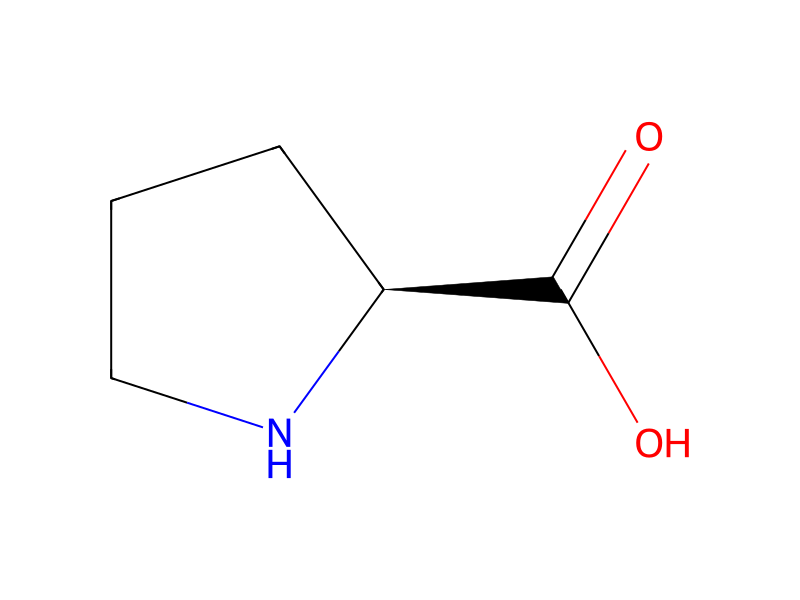
L-Proline → 4-[1,8]Naphthyridin-2-yl-piperidine-1-carboxylic acid benzyl ester
Reaction equation

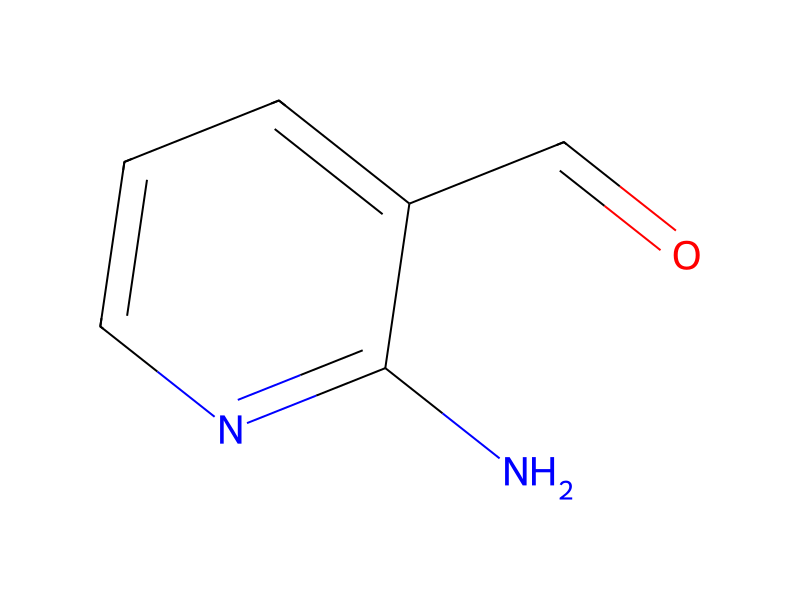
[CH2:1]([O:8][C:9]([N:11]1[CH2:16][CH2:15][CH:14]([C:17](=O)[CH3:18])[CH2:13][CH2:12]1)=[O:10])[C:2]1[CH:7]=[CH:6][CH:5]=[CH:4][CH:3]=1.[NH2:20][C:21]1[C:26]([CH:27]=O)=[CH:25][CH:24]=[CH:23][N:22]=1.N1CCC[C@H]1C(O)=O>C(O)C>[CH2:1]([O:8][C:9]([N:11]1[CH2:16][CH2:15][CH:14]([C:17]2[CH:18]=[CH:27][C:26]3[C:21](=[N:22][CH:23]=[CH:24][CH:25]=3)[N:20]=2)[CH2:13][CH2:12]1)=[O:10])[C:2]1[CH:7]=[CH:6][CH:5]=[CH:4][CH:3]=1Participants
5



Procedure
100 mg (0.383 mmol) ketone (21), 47 mg (0.383 mmol) 2-aminopyridine-3-carbaldehyde and 22 mg (0.192 mmol) proline were refluxed in ethanol for 3 days. The solvent was removed under reduced pressure. The crude product was purified by chromatography on silica gel (ethyl acetate/hexane) to yield 4-[1,8]naphthyridin-2-yl-piperidine-1-carboxylic acid benzyl ester as an oil. 210 mg (0,605 mmol) of this intermediate were dissolved together with 50 mg 10% Pd/C in 50 ml methanol and stirred under an atmosphere of hydrogen for 18 h. Removal of the catalyst by filtration through a pad of Celite followed by evaporation of the solvent under reduced pressure gave the desired amine (22).
Workup
- customThe solvent was removed under reduced pressure
- customThe crude product was purified by chromatography on silica gel (ethyl acetate/hexane)
Sources & evidence
- ORD record
- ord-9ea548d1ca0945a48468bd02313d49d4
- Source dataset
- uspto-grants-2015_01
- Patent number
- US08927534B2
Reaction notes
Loading…