Phosphorus oxychloride → HCID 86700919, compound
Reaction equation

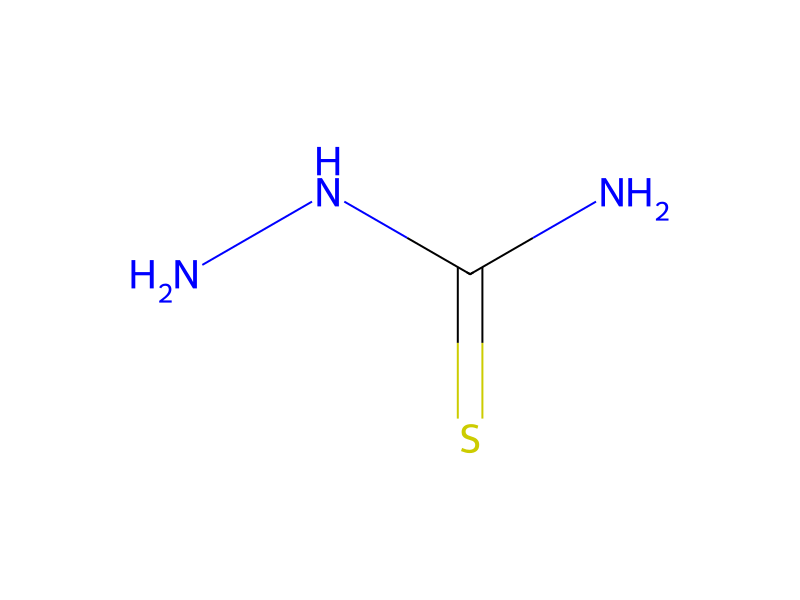
[NH2:1][NH:2][C:3]([NH2:5])=[S:4].[F:6][C@@H:7]([CH3:11])[C:8](O)=O.O=P(Cl)(Cl)Cl>O1CCOCC1>[F:6][C@H:7]([C:11]1[S:4][C:3]([NH2:5])=[N:2][N:1]=1)[CH3:8]Participants
Reactant 3


Product 1

Reagents, catalysts & solvents 1

Conditions
- Temperature
- 0 °C
Procedure
A 350 mL sealable pressure vessel was charged with thiosemicarbazide (11.17 g, 122.5 mmol) and dry dioxane (100 mL), and the mixture was cooled at 0° C. under an N2 atmosphere. To this rapidly stirring mixture was slowly added a solution of (S)-2-fluoropropanoic acid (9.40 g, 102.1 mmol, from Fritz-Langhals, E., Tetrahedron Asymmetry, 981 (1994)) in dioxane (10 mL). To the resulting mixture was added POCl3 (11.22 mL, 122.5 mmol) dropwise, then the cooling bath was removed and the thick white slurry was stirred at room temperature for 1 h. The vessel was then sealed and the mixture was heated at 90-95° C. (oil bath temperature) for 5 h. The cooled mixture was stirred at room temperature for 14 h (Note: this was for convenience only and is optional) and then the supernatant (two-phase mixture) was decanted and concentrated under reduced pressure. The lower phase was slowly poured into ice water (250 mL) and then the concentrate was also added. This mixture was rapidly stirred until it was essentially a homogeneous (turbid) solution, and then it was basified to pH 9-9.5 using 40% aqueous NaOH. The resulting slurry was filtered and the filter-cake was washed with water (Note: LC of this beige solid showed that it contained only a trace of the desired product, so it was not further investigated). The combined filtrate was then extracted with EtOAc (×3) and the organic phase was dried (Na2SO4) and evaporated to give a cream solid (10.58 g, 70%) which was the essentially pure product according to LC and LCMS. This material was used as such without further purification. An analytical sample was purified by flash chromatography [Isco/0-20% (MeOH—NH4OH, 9:1)-DCM] to give a white solid. LC (Method B): 0.608 min. MS (ESI) calcd. for C4H6FN3S m/z: 147.03. found: 148.05 [M+H]+. 1H NMR (600 MHz, DMSO-d6) δ 7.38 (s, 2H), 5.82 (dq, J=6.4, 48.0 Hz, 1H), 1.65 (dd, J=6.4, 24.0 Hz, 3H). Chiral LC: S:R=95:5.
Workup
- customthe cooling bath was removed
- stirringthe thick white slurry was stirred at room temperature for 1 h
- customThe vessel was then sealed
- temperaturethe mixture was heated at 90-95° C. (oil bath temperature) for 5 h
- stirringThe cooled mixture was stirred at room temperature for 14 h (
- customwas decanted
- concentrationconcentrated under reduced pressure
- additionThe lower phase was slowly poured into ice water (250 mL)
- additionthe concentrate was also added
- stirringThis mixture was rapidly stirred until it
- filtrationThe resulting slurry was filtered
- washthe filter-cake was washed with water (
- extractionThe combined filtrate was then extracted with EtOAc (×3)
- dry with materialthe organic phase was dried (Na2SO4)
- customevaporated
Sources & evidence
- ORD record
- ord-41bb8d7bcbdc478794f3b7c864cb55ef
- Source dataset
- uspto-grants-2015_01
- Patent number
- US08927688B2
Reaction notes
Loading…