3,4-Dihydroxybenzaldehyde → 4-(Difluoromethoxy)-3-hydroxybenzaldehyde
Reaction equation

[OH:1][C:2]1[CH:3]=[C:4]([CH:7]=[CH:8][C:9]=1[OH:10])[CH:5]=[O:6].Cl[C:12]([F:17])([F:16])C([O-])=O.[Na+].[OH-].[Na+]>CN(C)C=O.O>[F:16][CH:12]([F:17])[O:10][C:9]1[CH:8]=[CH:7][C:4]([CH:5]=[O:6])=[CH:3][C:2]=1[OH:1]Participants


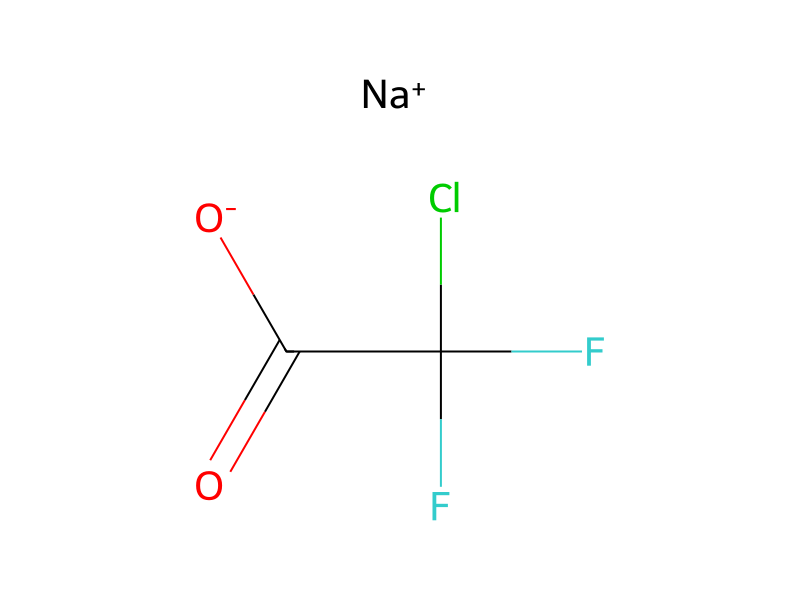



Conditions
- Temperature
- 120 °C
Procedure
Commercially available 3,4-dihydroxybenzaldehyde (5 g, 36.2 mmol) and commercially available sodium chlorodifluoroacetate (5.57 g, 36.5 mmol) were dissolved in N,N-dimethylformamide (45 mL) and water (905 μL), and then sodium hydroxide (1.48 g, 37.0 mmol) was added at room temperature, and the mixture was heated and stirred at 120° C. for 2 hours. The solvent was evaporated under vacuum, the residue was cooled to 0° C., and 5 M hydrochloric acid and diethyl ether were added for partition. The organic layer was washed with water and a saturated saline solution, and then the solvent was evaporated. The residue was dissolved in dichloromethane and the resultant was purified with silica gel column chromatography (n-heptane:ethyl acetate 9:1-7:3), and then the target fraction was concentrated under vacuum to obtain the title compound (2.66 g, 39%).
Workup
- temperaturethe mixture was heated
- customThe solvent was evaporated under vacuum
- temperaturethe residue was cooled to 0° C.
- addition5 M hydrochloric acid and diethyl ether were added
- customfor partition
- washThe organic layer was washed with water
- customa saturated saline solution, and then the solvent was evaporated
- dissolutionThe residue was dissolved in dichloromethane
- customthe resultant was purified with silica gel column chromatography (n-heptane:ethyl acetate 9:1-7:3)
- concentrationthe target fraction was concentrated under vacuum
Sources & evidence
- ORD record
- ord-2e99acfe22304685b8b2b542d037d906
- Source dataset
- uspto-grants-2015_01
- Patent number
- US08933099B2
Reaction notes
Loading…