Hydrochloric Acid → HCID 21531899, compound
Reaction equation

[Br:1][C:2]1[CH:7]=[CH:6][C:5]([CH:8]([CH3:10])[CH3:9])=[CH:4][CH:3]=1.CO[CH2:13][Cl:14].[Cl-].[Al+3].[Cl-].[Cl-].Cl>ClCCl.C(Cl)(Cl)(Cl)Cl>[Br:1][C:2]1[CH:7]=[CH:6][C:5]([CH:8]([CH3:10])[CH3:9])=[CH:4][C:3]=1[CH2:13][Cl:14]Participants

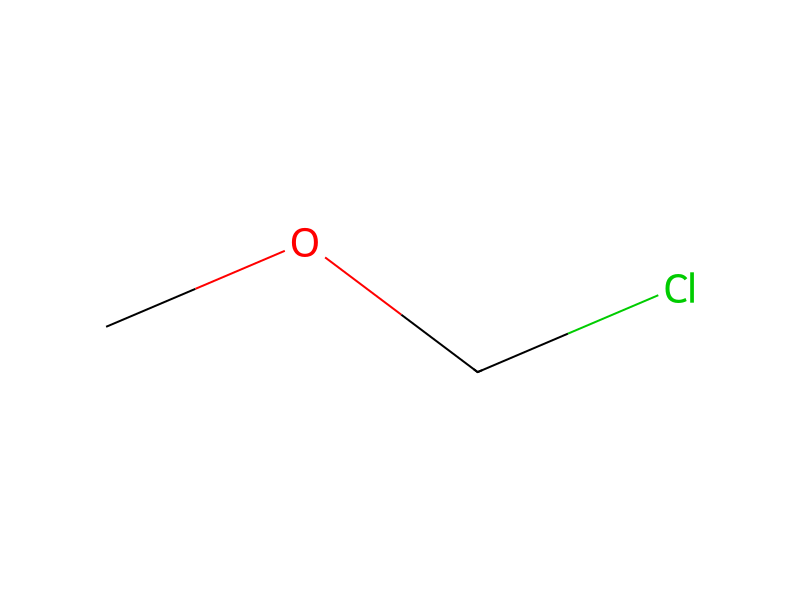





Conditions
- Temperature
- -30 °C
Procedure
Under an argon atmosphere, 12.5 g (64 mmol) of 1-bromo-4-isopropylbenzene was placed in a 300 mL Schlenk flask, and 40 mL of carbon tetrachloride and 28.9 mL (384 mmol) of chloromethyl methyl ether were added. The mixture was cooled to −30° C., and after adding 17.1 g (128 mmol) of aluminum chloride, heated to 0° C., then stirred for 20 minutes, and thereafter heated to room temperature and then stirred for 5 minutes. The reaction solution was poured into ice water, and 100 mL of 2M hydrochloric acid and 100 mL of dichloromethane were added while stirring well. After separating the organic layer, the aqueous layer was extracted two times with 50 mL of dichloromethane, and then the organic layers were combined. The organic layer was then dried on anhydrous sodium sulfate and then filtered, and by then distilling off the dichloromethane, 15.6 g of 1-bromo-2-chloromethyl-4-isopropylbenzene was obtained as a transparent, pale-yellow oil.
Workup
- temperatureheated to 0° C.
- temperatureheated to room temperature
- stirringstirred for 5 minutes
- additionwere added
- stirringwhile stirring well
- customAfter separating the organic layer
- extractionthe aqueous layer was extracted two times with 50 mL of dichloromethane
- dry with materialThe organic layer was then dried on anhydrous sodium sulfate
- filtrationfiltered
- distillationby then distilling off the dichloromethane
Sources & evidence
- ORD record
- ord-1cedb511d6ed4ec099835eb728822054
- Source dataset
- uspto-grants-2015_01
- Patent number
- US08933437B2
Reaction notes
Loading…