Sulfuric Acid → Methyl ((2S,3S)-4-chloro-3-hydroxy-1-phenylbutan-2-yl)carbamate
Reaction equation
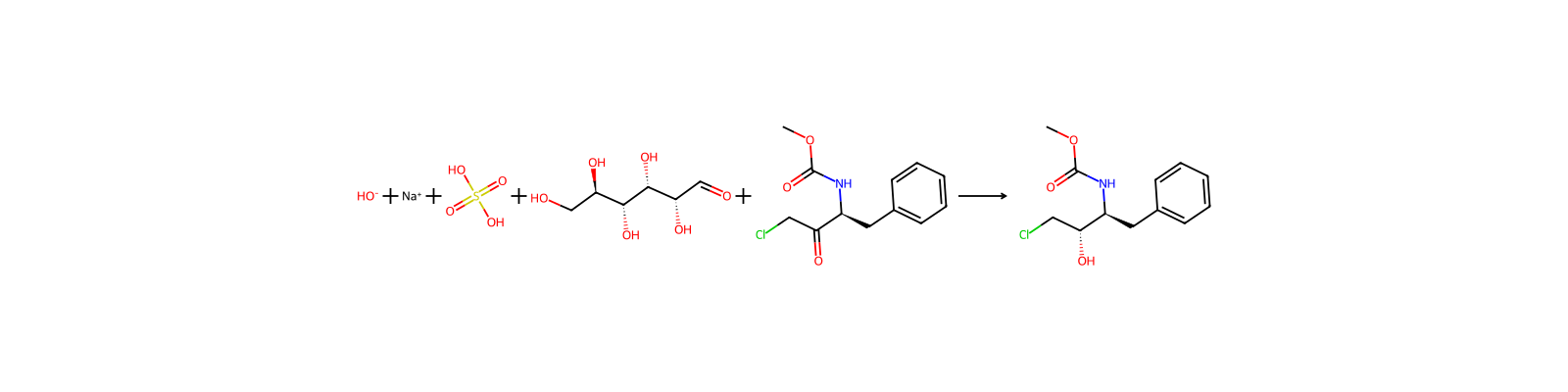
[OH-].[Na+].S(=O)(=O)(O)O.O=C[C@@H]([C@H]([C@@H]([C@@H](CO)O)O)O)O.[Cl:20][CH2:21][C:22](=[O:36])[C@@H:23]([NH:31][C:32]([O:34][CH3:35])=[O:33])[CH2:24][C:25]1[CH:30]=[CH:29][CH:28]=[CH:27][CH:26]=1>>[Cl:20][CH2:21][C@@H:22]([OH:36])[C@@H:23]([NH:31][C:32]([O:34][CH3:35])=[O:33])[CH2:24][C:25]1[CH:30]=[CH:29][CH:28]=[CH:27][CH:26]=1Participants


Procedure
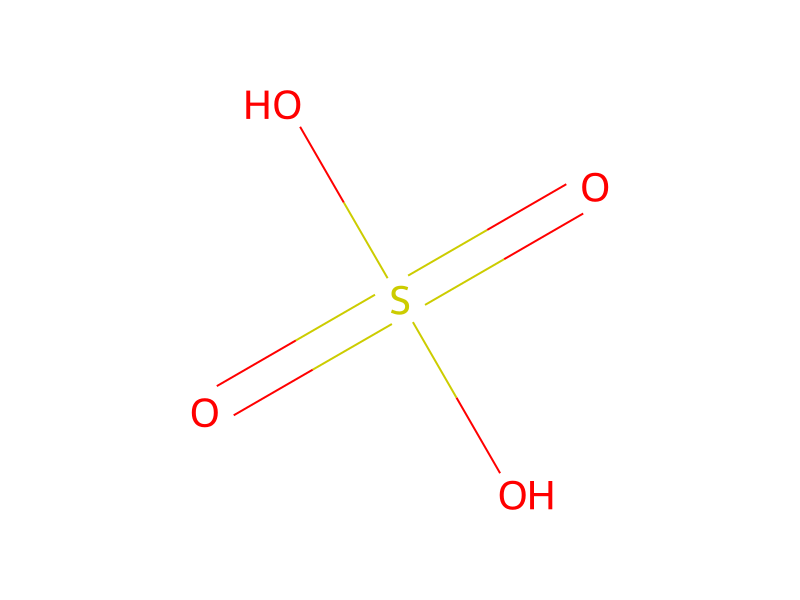
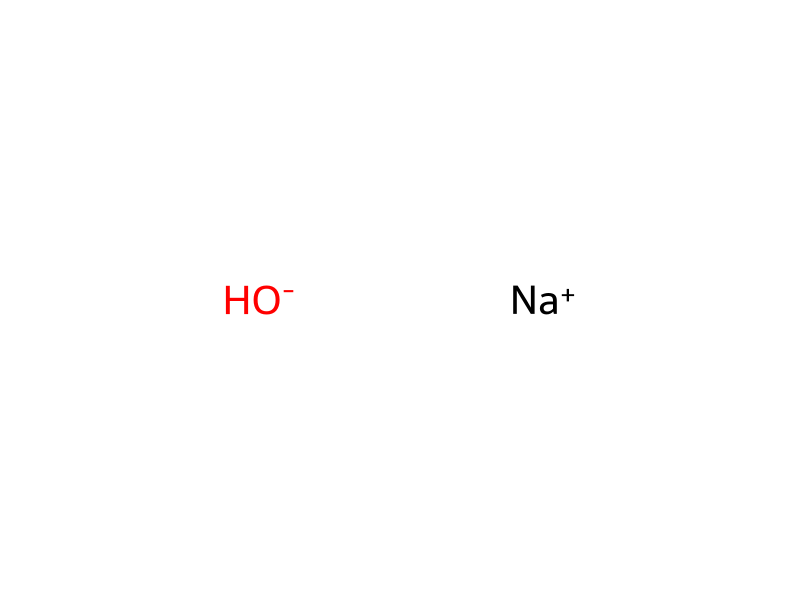
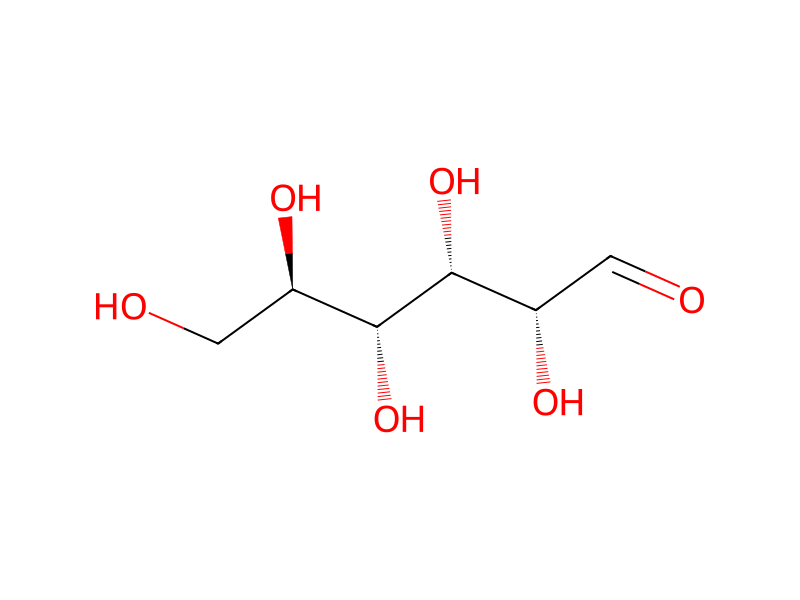
A culture was obtained by the same method as in Example 1 using Geotrichum eriense ATCC 22311 as the microorganism and then adjusted to pH 6 with an aqueous sodium hydroxide solution and an aqueous sulfuric acid solution. A 25-ml portion of this culture, 1 g of glucose and (3S)-1-chloro-3-methoxycarbonylamino-4-phenyl-2-butanone were mixed up in a 500-ml Sakaguchi flask and the mixture was shaken for 1 day to thereby allow the reaction to proceed. Then, again, 250 mg of (3S)-1-chloro-3-methoxycarbonylamino-4-phenyl-2-butanone was added. The reaction was allowed to proceed for further 2 days with shaking while the glucose concentration was controlled within the range of 0 to 4% by adding glucose portionwise. Thereafter, a further 250 mg portion of (3S)-1-chloro-3-methoxycarbonylamino-4-phenyl-2-butanone was added and shaking was continued for further 4 days to allow the reaction to proceed while controlling the glucose concentration in the same manner as mentioned above. The reaction mixture was diluted with 100 ml of water and extracted with 100 ml portion of ethyl acetate for 3 times. The organic extract layers were combined, washed with 100 ml of water and further with 100 ml of a saturated aqueous sodium chloride solution and then dried over anhydrous sodium sulfate. This solution was concentrated to dryness to give (2S,3S)-1-chloro-3-methoxycarbonylamino-4-phenyl-2-butanol as a white solid (607 mg; yield 67%; purity 83.7 wt %; selectivity 2S,3S/2R,3S=97/3; optical purity 99.7% ee).
Workup
- customA culture was obtained by the same method as in Example 1 using Geotrichum eriense ATCC 22311 as the microorganism
- customthe reaction
- waitto proceed for further 2 days
- stirringshaking
- waitwas continued for further 4 days
- customthe reaction
- concentrationthe glucose concentration in the same manner
- additionThe reaction mixture was diluted with 100 ml of water
- extractionextracted with 100 ml portion of ethyl acetate for 3 times
- washwashed with 100 ml of water and further with 100 ml of a saturated aqueous sodium chloride solution
- dry with materialdried over anhydrous sodium sulfate
- concentrationThis solution was concentrated to dryness
Sources & evidence
- ORD record
- ord-95c128d17561404a9f727a241cd8c7d9
- Source dataset
- uspto-grants-1998_03
- Patent number
- US05726047
Reaction notes
Loading…