Potassium Carbonate → 1-(3-fluoro-4-nitro-phenyl)-1H-pyridin-2-one
Reaction equation

[OH:1][C:2]1[CH:7]=[CH:6][CH:5]=[CH:4][N:3]=1.[F:8][C:9]1[CH:14]=[C:13](F)[CH:12]=[CH:11][C:10]=1[N+:16]([O-:18])=[O:17].C(=O)([O-])[O-].[K+].[K+]>CC(C)=O>[F:8][C:9]1[CH:14]=[C:13]([N:3]2[CH:4]=[CH:5][CH:6]=[CH:7][C:2]2=[O:1])[CH:12]=[CH:11][C:10]=1[N+:16]([O-:18])=[O:17]Participants
5
Reactant 3

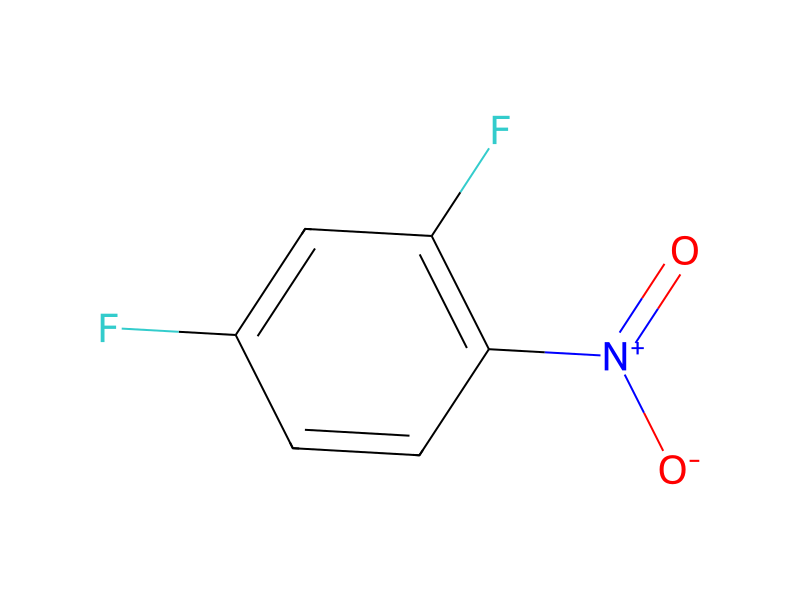

Product 1

Reagents, catalysts & solvents 1

Procedure
2.5 g (26.3 mmol) 2-hydroxypyridine, 2.9 ml (26.3 mmol) 2,4-difluoronitrobenzene, are dissolved in 100 ml acetone, combined with 4.0 g (28.9 mmol) potassium carbonate and stirred for one day at ambient temperature. The undissolved matter is filtered off and the salt residues are rinsed with acetone. The combined organic phases are evaporated to dryness. The residue is purified by chromatography (silica gel; eluant: cyclohexane-ethyl acetate gradient).
Workup
- filtrationThe undissolved matter is filtered off
- washthe salt residues are rinsed with acetone
- customThe combined organic phases are evaporated to dryness
- customThe residue is purified by chromatography (silica gel; eluant: cyclohexane-ethyl acetate gradient)
Sources & evidence
- ORD record
- ord-8aaaca43b4ce485eada8f856a725b86b
- Source dataset
- uspto-grants-2009_11
- Patent number
- US07615549B2
Reaction notes
Loading…