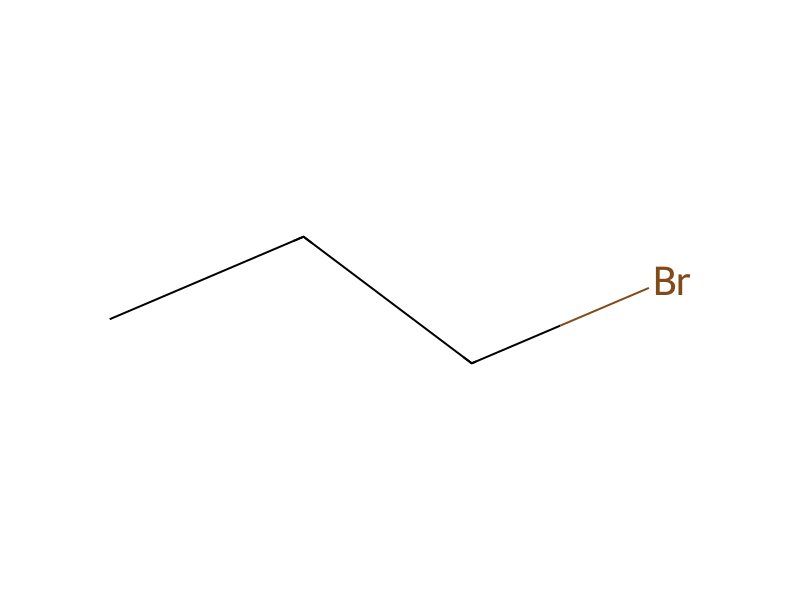
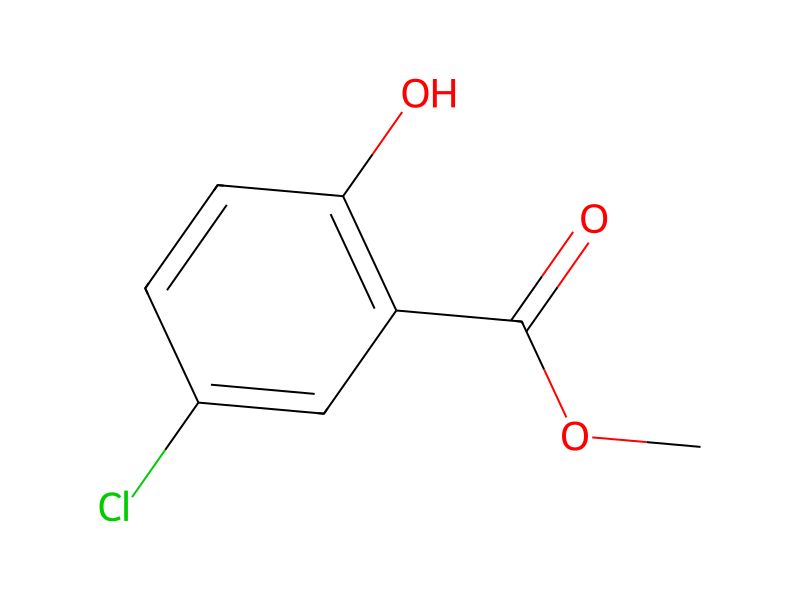
1-Bromopropane → Methyl 5-chloro-2-propoxybenzoate
Reaction equation

Br[CH2:2][CH2:3][CH3:4].[Cl:5][C:6]1[CH:7]=[CH:8][C:9]([OH:16])=[C:10]([CH:15]=1)[C:11]([O:13][CH3:14])=[O:12].C(=O)([O-])[O-].[K+].[K+]>C(#N)C>[Cl:5][C:6]1[CH:7]=[CH:8][C:9]([O:16][CH2:2][CH2:3][CH3:4])=[C:10]([CH:15]=1)[C:11]([O:13][CH3:14])=[O:12]Participants
5
Reactant 3

Product 1

Reagents, catalysts & solvents 1

Procedure
A mixture of 1-bromo-propane (1 ml, 11 mmol), methyl 5-chloro-2-hydroxy-benzoate (1.0 g, 5.4 mmol), potassium carbonate (1.5 g, 10.9 mmol), and acetonitrile (20 ml) was heated under reflux for 4 hours. After cooling to room temperature, the mixture was filtered and the filtrate was concentrated under reduced pressure. The residue was partitioned between ethyl acetate (100 ml) and saturated aqueous sodium chloride solution (50 ml). The organic layer was concentrated under reduced pressure to provide methyl 5-chloro-2-propoxy-benzoate (1.2 g, 97% yield).
Workup
- temperaturewas heated
- temperatureunder reflux for 4 hours
- filtrationthe mixture was filtered
- concentrationthe filtrate was concentrated under reduced pressure
- customThe residue was partitioned between ethyl acetate (100 ml) and saturated aqueous sodium chloride solution (50 ml)
- concentrationThe organic layer was concentrated under reduced pressure
Sources & evidence
- ORD record
- ord-2069d35b2c8048c7bf09f378e5da6376
- Source dataset
- uspto-grants-2009_11
- Patent number
- US07618968B2
Reaction notes
Loading…