Diethylcarbamoyl chloride → HCID 12374091, compound
Reaction equation

[NH:1]1[CH2:5][CH2:4][CH:3]([OH:6])[CH2:2]1.[CH2:7]([N:9]([CH2:13][CH3:14])[C:10](Cl)=[O:11])[CH3:8]>>[CH2:7]([N:9]([CH2:13][CH3:14])[C:10]([N:1]1[CH2:5][CH2:4][CH:3]([OH:6])[CH2:2]1)=[O:11])[CH3:8]Participants

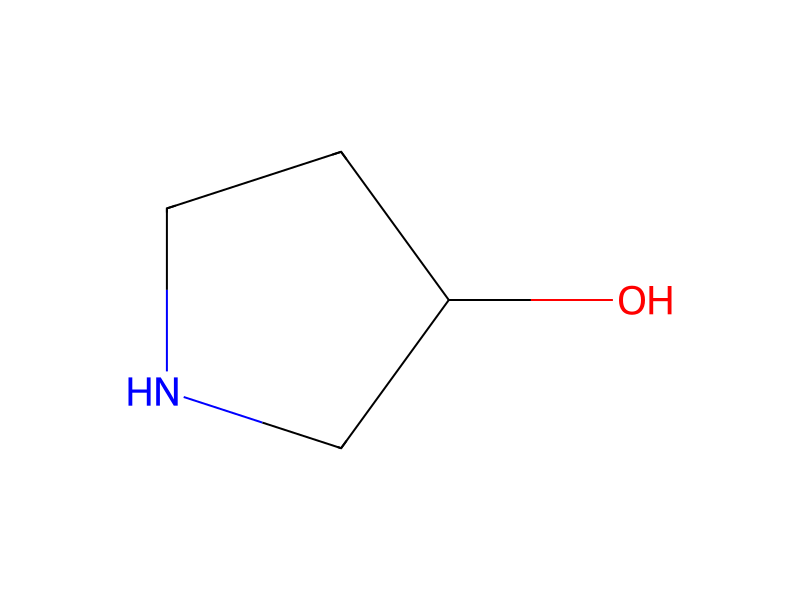

Procedure
A method of preparing each of the foregoing compounds is presented in the following examples. In general, however, in the 1-methyl pyrrolidine series (compounds I and II) cyclization of 1,4-dibromo-2-butanol to yield 1-methyl-3-pyrrolidinol was followed by chlorination to give 3-chloro-1-methyl pyrrolidine. Substitution with benzylamine provided the nitrogen substituent 3-(N-benzyl)amino-1-methyl pyrrolidine which was acylated with diethylcarbamyl chloride and debenzylated to yield compound I. Methylation of 3-(N-benzyl)amino-1-methyl pyrrolidine gave compound 3-(N-benzyl-N-methyl)-amino-1-methyl pyrrolidine which was debenzylated to 1-methyl-3-(N-methyl)amino pyrrolidine and acylated with ethyl chloroformate to give compound II. Synthesis of the 1-acylated pyrrolidine compounds III and IV commenced by treated commercially available 3-pyrrolidinol with diethylcarbamyl chloride to yield 1-diethylcarbamyl-3-hydroxy pyrrolidine. The 3-benzylamino analog 3-(N-benzyl)amino-1-diethylcarbamyl pyrrolidine was obtained by treatment of 1-diethylcarbamyl-3-hydroxy pyrrolidine with thionyl chloride followed by benzylamine. Subsequent methylation yielded the compound 3-(N-benzyl-N-methyl)amino-1-diethylcarbamyl pyrrolidine which, on debenzylation gave the compound III. Subsequent methylation of III yielded the compound IV.
Sources & evidence
- ORD record
- ord-4096913ae0e9437bb9f9f5f45ef36b80
- Source dataset
- uspto-grants-1977_11
- Patent number
- US04056535
Reaction notes
Loading…