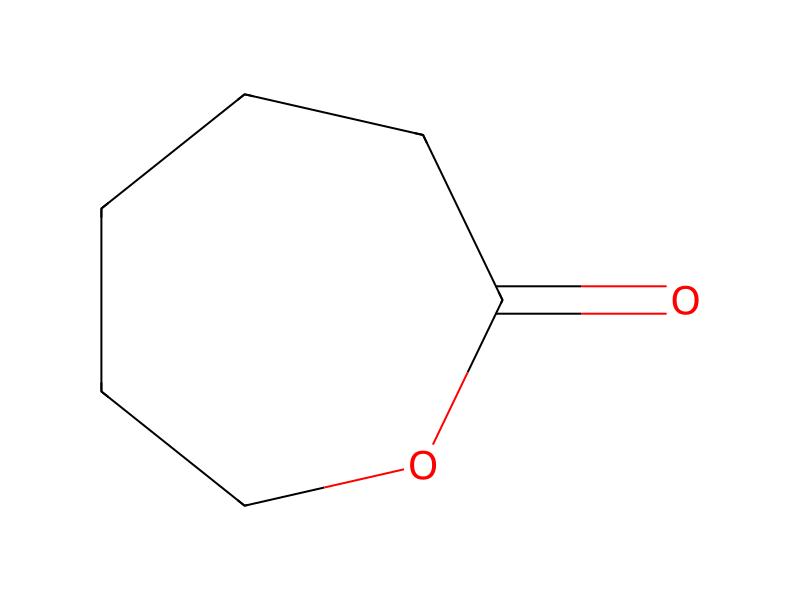
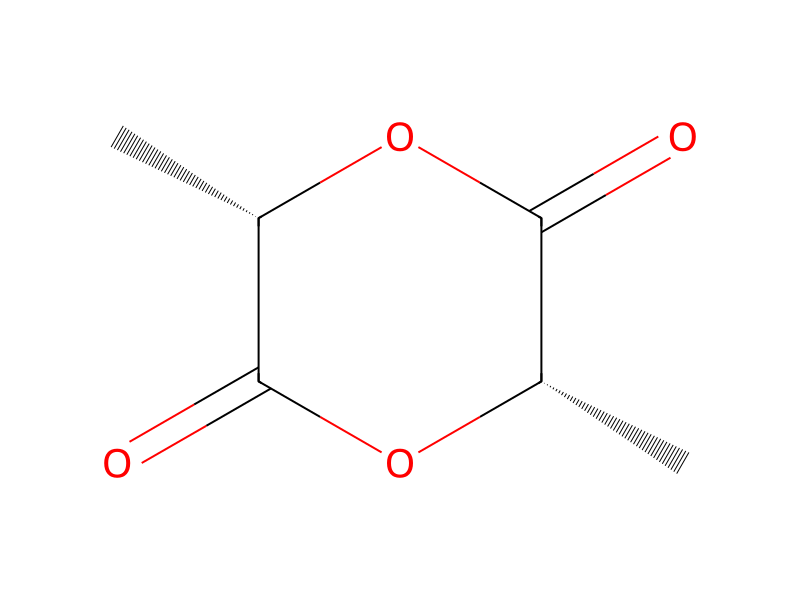
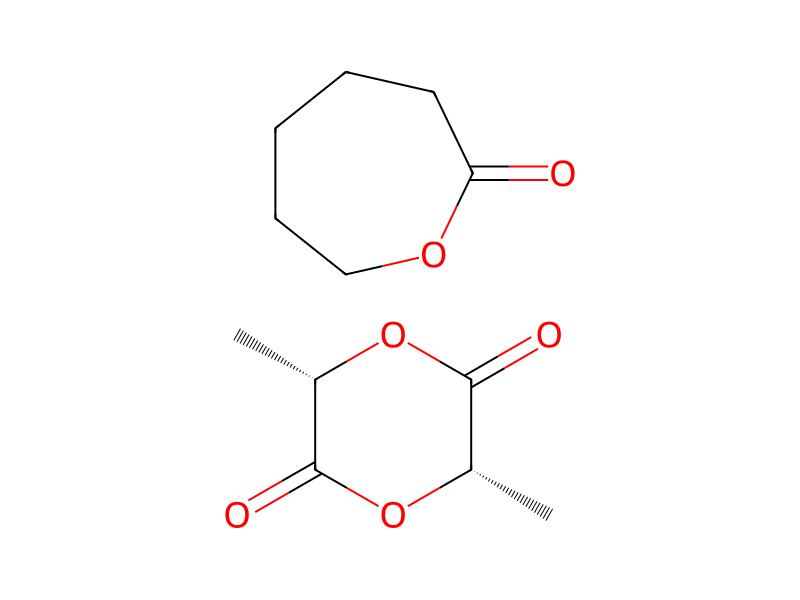
epsilon-CAPROLACTONE → L-lactide epsilon-caprolactone
Reaction equation

[CH3:1][C@@H:2]1[O:9][C:7](=[O:8])[C@H:6]([CH3:10])[O:5][C:3]1=[O:4].[C:11]1(=[O:18])[O:17][CH2:16][CH2:15][CH2:14][CH2:13][CH2:12]1>C1C=CC=CC=1>[CH3:1][C@@H:2]1[O:9][C:7](=[O:8])[C@H:6]([CH3:10])[O:5][C:3]1=[O:4].[C:11]1(=[O:18])[O:17][CH2:16][CH2:15][CH2:14][CH2:13][CH2:12]1Participants
4
Reactant 2
Product 1
Reagents, catalysts & solvents 1

Procedure
The procedure of Example II is repeated except that 329 grams of L-(-)-lactide, 17.3 grams of epsilon caprolactone and 3.5 ml of benzene containing 0.7 gram of stannous caprylate are placed in the ampoule, evacuated, sealed and heated for 48 hours at 105° to 144° C. The copolymer thus obtained can be melt-molded by conventional thermoplastic techniques. The copolymer is an opaque, light yellow copolymer having a substantial melting-point endotherm at 165° C. Physical properties are listed in more detail in Table 1.
Workup
- customevacuated
- customsealed
- temperatureheated for 48 hours at 105° to 144° C
- customThe copolymer thus obtained can
- customat 165° C
Sources & evidence
- ORD record
- ord-a055f1c776a44e3bb41a7411424628df
- Source dataset
- uspto-grants-1977_11
- Patent number
- US04057537
Reaction notes
Loading…