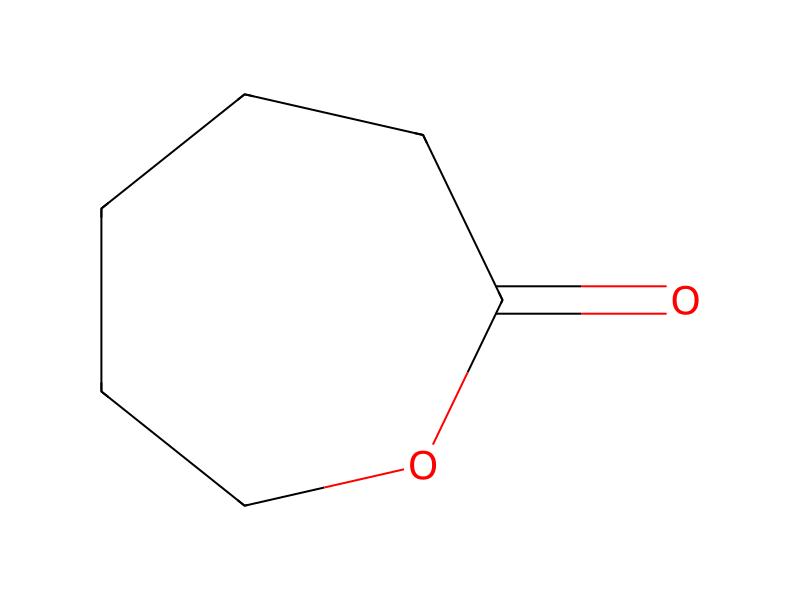
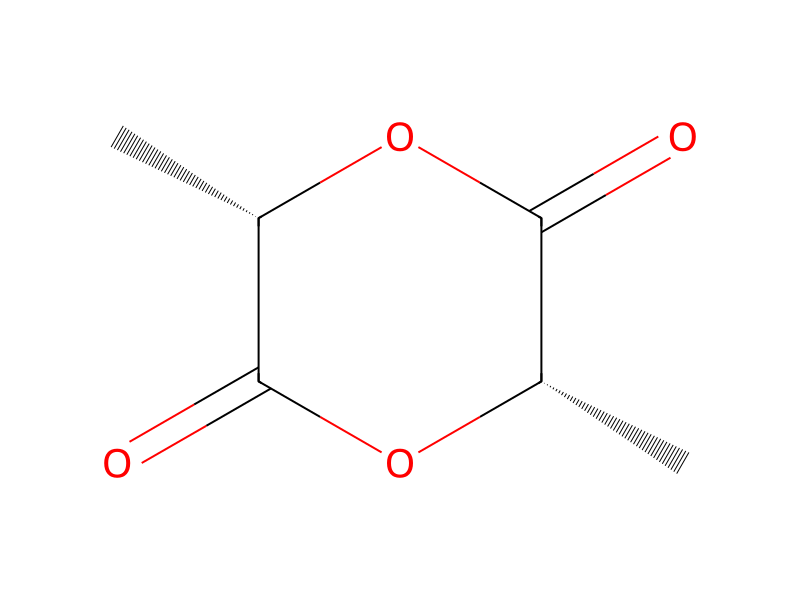
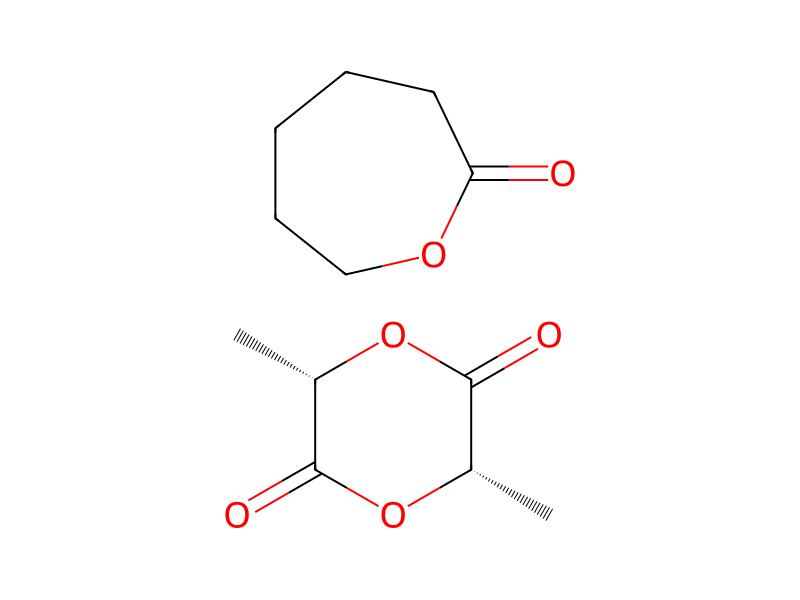
epsilon-CAPROLACTONE → L-lactide epsilon-caprolactone
Reaction equation

[CH3:1][C@@H:2]1[O:9][C:7](=[O:8])[C@H:6]([CH3:10])[O:5][C:3]1=[O:4].[C:11]1(=[O:18])[O:17][CH2:16][CH2:15][CH2:14][CH2:13][CH2:12]1>>[CH3:1][C@@H:2]1[O:9][C:7](=[O:8])[C@H:6]([CH3:10])[O:5][C:3]1=[O:4].[C:11]1(=[O:18])[O:17][CH2:16][CH2:15][CH2:14][CH2:13][CH2:12]1Participants
3
Procedure
The procedure of Example II is repeated except that 75 grams of L-(-)-lactide, 25 grams of epsilon caprolactone and 0.2 gram of stannous acetate are heated in a vacuum-sealed ampoule for 3 days at 136° to 138° C. Conversion to the copolymer is 93 percent. The copolymer has GPC molecular weights of Mw = 90,500 and Mn = 29,100.
Workup
- temperatureare heated in a vacuum-sealed ampoule for 3 days at 136° to 138° C
Sources & evidence
- ORD record
- ord-8556404284234563bce7be103837fe89
- Source dataset
- uspto-grants-1977_11
- Patent number
- US04057537
Reaction notes
Loading…