Benzoyl Peroxide → L-lactide epsilon-caprolactone
Reaction equation

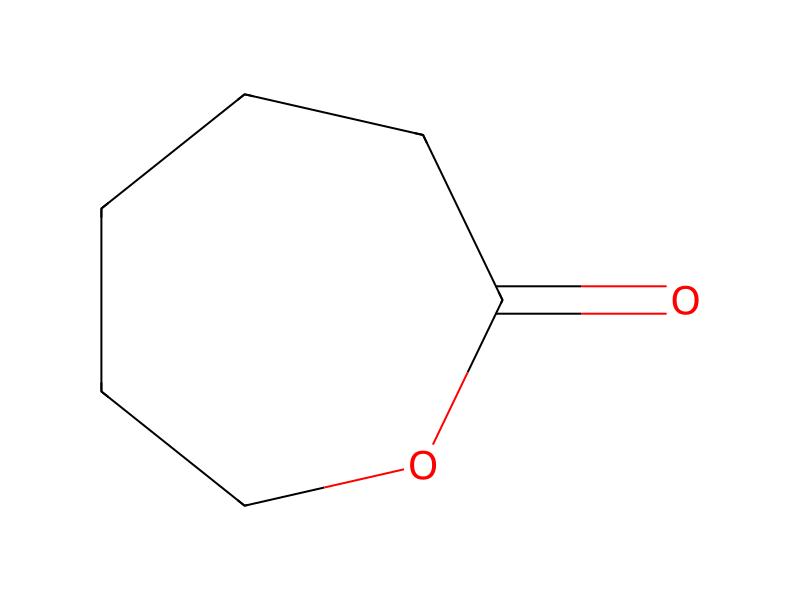
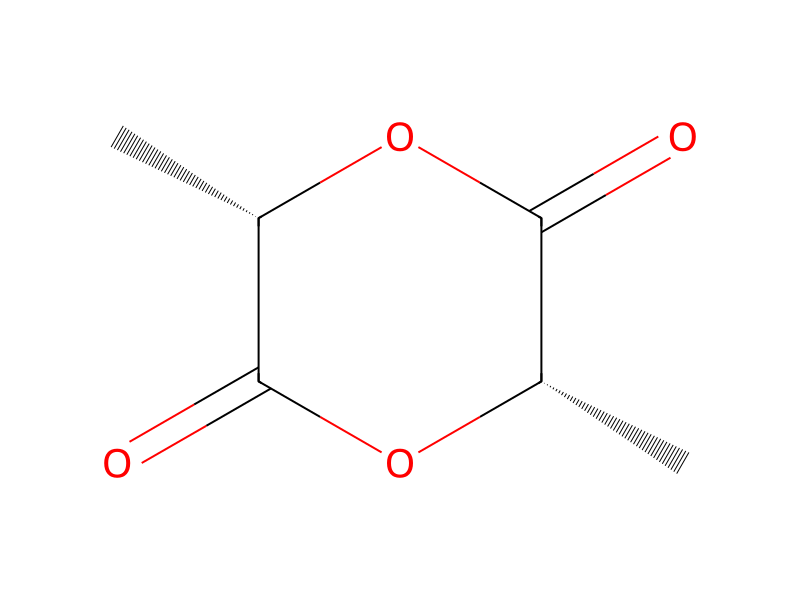
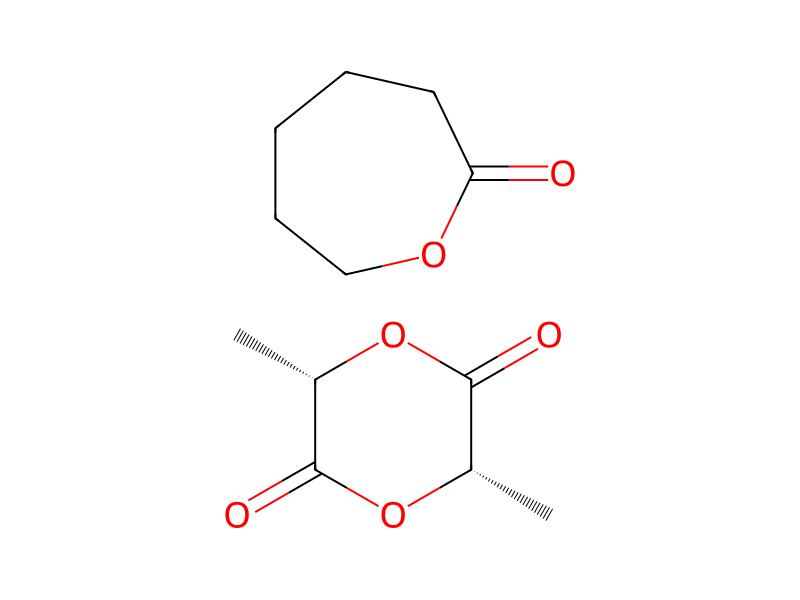
[CH3:1][C@@H:2]1[O:9][C:7](=[O:8])[C@H:6]([CH3:10])[O:5][C:3]1=[O:4].[C:11]1(=[O:18])[O:17][CH2:16][CH2:15][CH2:14][CH2:13][CH2:12]1.C(OOC(=O)C1C=CC=CC=1)(=O)C1C=CC=CC=1>C1C=CC=CC=1>[CH3:1][C@@H:2]1[O:9][C:7](=[O:8])[C@H:6]([CH3:10])[O:5][C:3]1=[O:4].[C:11]1(=[O:18])[O:17][CH2:16][CH2:15][CH2:14][CH2:13][CH2:12]1Participants
5
Reactant 3

Product 1
Reagents, catalysts & solvents 1

Procedure
110 Grams of a copolymer prepared from 75 parts by weight of L-(-)-lactide and 25 parts by weight of epsilon caprolactone according to the procedure of Example II is blended with 8 grams of dibenzoyl peroxide according to the procedure of Example VIII. The cured copolymer thus obtained is easily molded into colorless, transparent thermosets which are insoluble in benzene. The tensile strength of the cured copolymer is 1560 psi; the total elongation is 450 percent; the initial elastic modulus is 658; and the rebound value (ASTM-D-2632) is 13 percent.
Workup
- customThe cured copolymer thus obtained
Sources & evidence
- ORD record
- ord-24cb6544eaad47c69ccf5679ce53a82f
- Source dataset
- uspto-grants-1977_11
- Patent number
- US04057537
Reaction notes
Loading…