Methacrylic Acid → Bisphenol A
Reaction equation

C(O[CH2:6][CH:7]1[O:9][CH2:8]1)(=O)C=C.C(O[CH2:16][CH:17]1[O:19][CH2:18]1)(=O)C(C)=C.C(O[CH2:24][CH:25]1O[CH2:26]1)C=C.C(O[C:33]1C=C[CH:36]=[CH:35][C:34]=1[CH2:39]C=C)C1OC1.[CH2:42](OC1C=CC=CC=1CC=CC)C1OC1.C(OCC(=C)C)C1OC1.C(O)(=O)C=C.C(O)(=O)C(C)=C.C([Cl:81])(=O)C=C>>[OH:19][C:17]1[CH:16]=[CH:42][C:35]([C:34]([C:26]2[CH:6]=[CH:7][C:8]([OH:9])=[CH:24][CH:25]=2)([CH3:39])[CH3:33])=[CH:36][CH:18]=1.[CH2:6]([CH:7]1[O:9][CH2:8]1)[Cl:81]Participants
Reactant 9


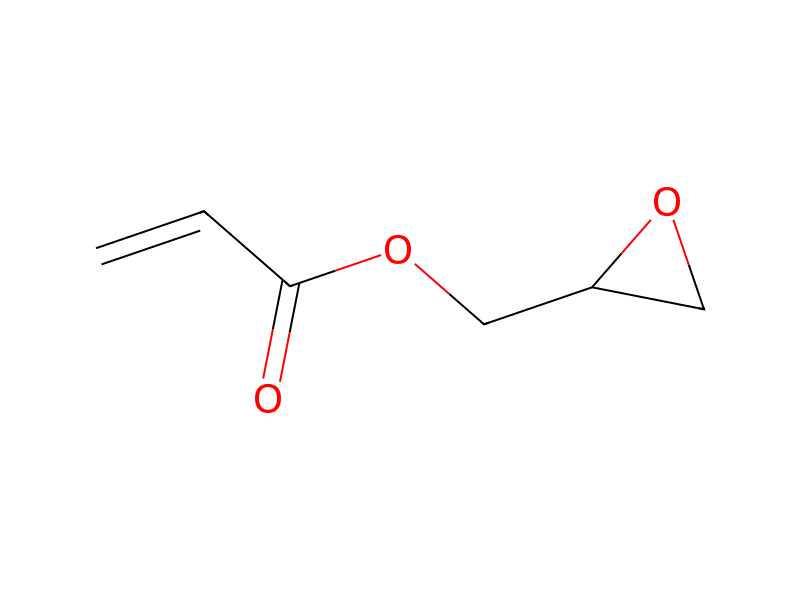
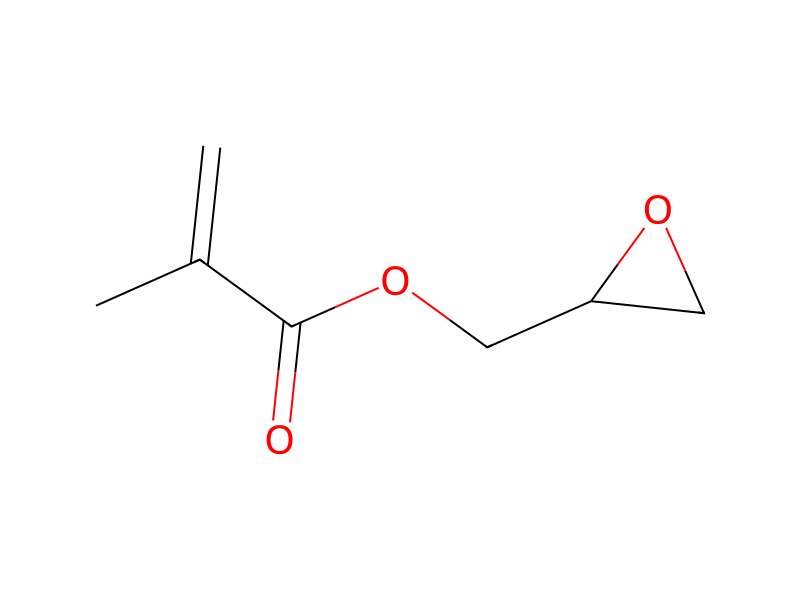




Product 2


Procedure
Examples of the compound having an effectively photopolymerizable carbon-to-carbon double bond and a 1,2-epoxy group in the molecule and having a boiling point of at least 120° C. [component (B) (i)] are glycidyl acrylate, glycidyl methacrylate, glycidyl allyl ether, o-allyl phenyl glycidyl ether, crotyl phenyl glycidyl ether, methallyl glycidyl ether, epoxy acrylate type resins obtained by condensing a part of the epoxy group of the polyepoxy compound exemplified above as component (A) with acrylic acid or methacrylic acid, epoxy acrylate type resins obtained by adding acryloyl chloride to the side chain of the polyepoxy compound exemplified above as component (A), especially an epoxy resin obtained by the condensation of bisphenol A and epichlorohydrin, and polyepoxy compounds obtained by epoxidizing some of the many carbon-to-carbon double bonds present in polybutadiene obtained by anionic polymerization.
Workup
- customobtained by condensing a part of the epoxy group of the polyepoxy compound
- customobtained
Sources & evidence
- ORD record
- ord-08435dfe3bbf460099b988bf5a9276c2
- Source dataset
- uspto-grants-1977_11
- Patent number
- US04060656
Reaction notes
Loading…