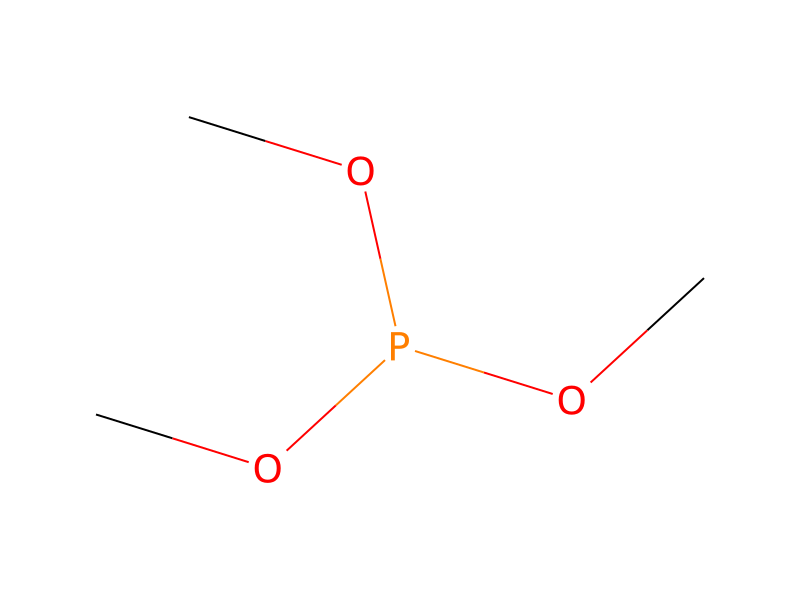
Trimethyl phosphite → (4-methylsulfanyl-benzyl)-phosphonic acid dimethyl ester
Reaction equation

[CH3:1][O:2][P:3]([O:6]C)[O:4][CH3:5].[CH3:8][S:9][C:10]1[CH:17]=[CH:16][C:13]([CH2:14]Cl)=[CH:12][CH:11]=1>>[CH3:8][S:9][C:10]1[CH:17]=[CH:16][C:13]([CH2:14][P:3](=[O:6])([O:4][CH3:5])[O:2][CH3:1])=[CH:12][CH:11]=1Participants
3


Procedure
First, dimethyl (4-methylthiobenzyl)phosphonate was synthesized, as follows: Trimethylphosphite (206 g, 1.66 mol) was stirred at reflux, and 245 g (1.42 mol) of 4-methylmercaptobenzyl chloride (prepared as described in Ulman, et al. U.S. Pat. No. 4,792,208, Example 1) was added dropwise over 30 min. The mixture was kept at reflux for 4 hours, and then cooled to room temperature. Dimethyl (4-methylthiobenzyl)phosphonate was obtained by fractional distillation at reduced pressure. The yield was 263 grams, which is 75% of theoretical.
Workup
- customFirst, dimethyl (4-methylthiobenzyl)phosphonate was synthesized
- temperatureat reflux
- addition4,792,208, Example 1) was added dropwise over 30 min
- temperatureat reflux for 4 hours
Sources & evidence
- ORD record
- ord-1910a60a5625469e9b9c1e66a48ea214
- Source dataset
- uspto-grants-1996_03
- Patent number
- US05501821
Reaction notes
Loading…