Morpholine → 1-Morpholino-1-cyclododecene
Reaction equation

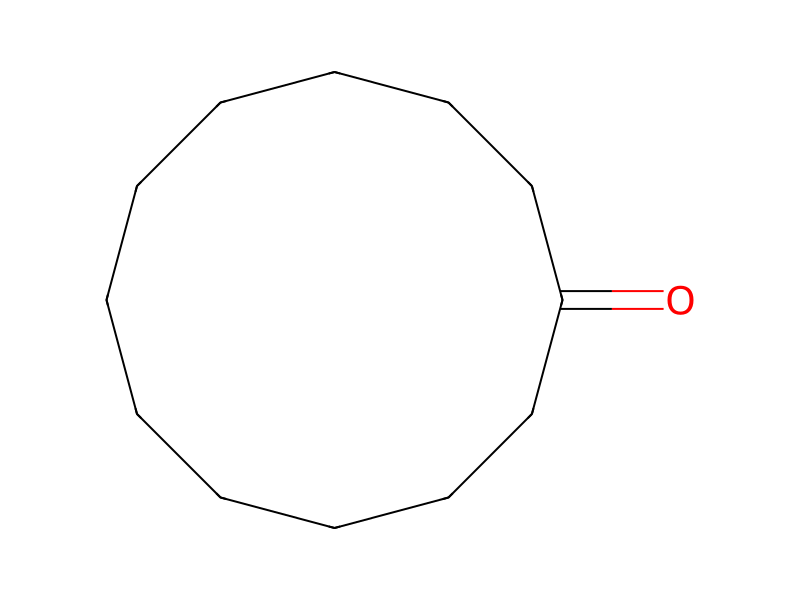
[C:1]1(=O)[CH2:12][CH2:11][CH2:10][CH2:9][CH2:8][CH2:7][CH2:6][CH2:5][CH2:4][CH2:3][CH2:2]1.[NH:14]1[CH2:19][CH2:18][O:17][CH2:16][CH2:15]1.O.C1(C)C=CC(S(O)(=O)=O)=CC=1>C1(C)C=CC=CC=1>[CH2:7]1[CH2:8][CH2:9][CH2:10][CH2:11][CH:12]=[C:1]([N:14]2[CH2:19][CH2:18][O:17][CH2:16][CH2:15]2)[CH2:2][CH2:3][CH2:4][CH2:5][CH2:6]1Participants
5
Reactant 3


Product 1

Reagents, catalysts & solvents 1

Procedure
A 100 mL three neck round bottom flask, equipped with a stir bar, thermometer and a Dean-Stark trap, was charged with 10 g (55 mmoles) of cyclododecanone, 6.7 g (77 mmoles) of morpholine, 40 mL of anhydrous toluene and a catalytic amount of p-toluenesulfonic acid monohydrate. The reaction mixture was refluxed for 48-77 hours. The toluene was removed under vacuum, and the reaction mixture was vacuum distilled to give 5.7 g of N-morpholino-1-cyclododecene (at 160°-168° C./0.5mm) as a 95% pure clear liquid.
Workup
- temperatureThe reaction mixture was refluxed for 48-77 hours
- customThe toluene was removed under vacuum
- distillationdistilled
Sources & evidence
- ORD record
- ord-1e7910ad98de4cc5b89af9dec2ca64a8
- Source dataset
- uspto-grants-1996_03
- Patent number
- US05502226
Reaction notes
Loading…