Benzene, 1-fluoro-2-methyl-4-nitro- → 1-Acetyl-4-(2-methyl-4-nitrophenyl)piperazine
Reaction equation

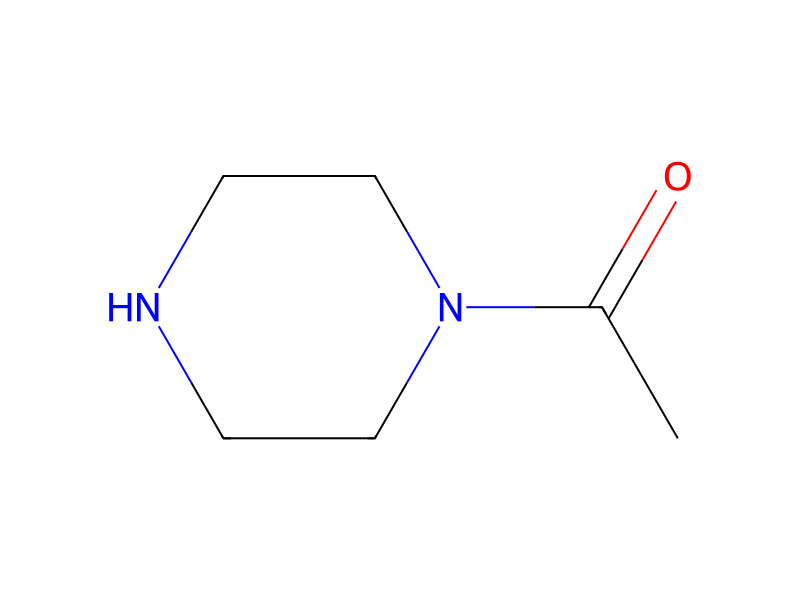
F[B-](F)(F)F.C([N+]1C=CN(C)C=1)CCC.F[C:17]1[CH:22]=[CH:21][C:20]([N+:23]([O-:25])=[O:24])=[CH:19][C:18]=1[CH3:26].[C:27]([N:30]1[CH2:35][CH2:34][NH:33][CH2:32][CH2:31]1)(=[O:29])[CH3:28]>C(#N)C.CCOC(C)=O.O>[C:27]([N:30]1[CH2:35][CH2:34][N:33]([C:17]2[CH:22]=[CH:21][C:20]([N+:23]([O-:25])=[O:24])=[CH:19][C:18]=2[CH3:26])[CH2:32][CH2:31]1)(=[O:29])[CH3:28]Participants
Reactant 3


Product 1

Reagents, catalysts & solvents 3



Conditions
- Temperature
- 95 °C
Procedure
1-Butyl-3-methylimidazolium tetrafluoroborate (1.75 g, 7.74 mmol) was added to a stirred solution of 1-fluoro-2-methyl-4-nitrobenzene (12 g, 77.35 mmol) and 1-acetylpiperazine (39.7 g, 309.4 mmol) in acetonitrile (3 ml). The reaction mixture was then heating at 95° C. overnight. The reaction mixture was allowed to cool down to room temperature. The solution was diluted with EtOAc and water. The precipitate formed was filtered off to give a solid corresponding to the required product. The organics were washed with water (4 times), brine, dried and evaporation of solvent to give a solid. Both solids were combined and after trituration with isohexane/ether and filtration, the title compound was obtained as a yellow solid which was dried in vac oven overnight at 50° C. (19.61 g, 96%). NMR (400 MHz) 2.06 (s, 3H), 2.38 (s, 3H), 2.99 (dt, 4H), 3.61 (m, 4H), 7.14 (d, 1H), 8.04 (dd, 1H), 8.07 (d, 1H); m/z 264.
Workup
- temperatureto cool down to room temperature
- customThe precipitate formed
- filtrationwas filtered off
Sources & evidence
- ORD record
- ord-910559b303db4f619a92487016986701
- Source dataset
- uspto-grants-2010_02
- Patent number
- US07655652B2
Reaction notes
Loading…