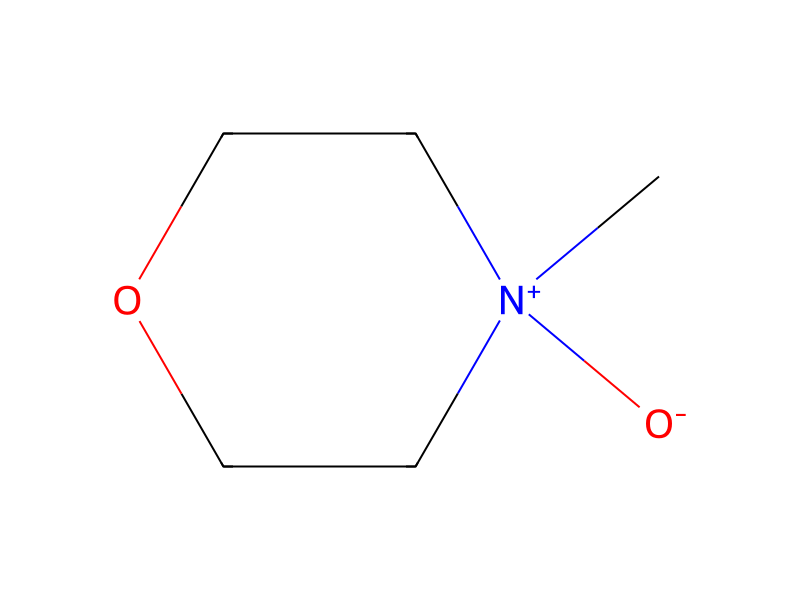
Methyl morpholine oxide → 2-(3,4-Diethoxyphenyl)-4-formylthiazole
Reaction equation

C[N+]1([O-])CC[O:5]CC1.Cl[CH2:10][C:11]1[N:12]=[C:13]([C:16]2[CH:21]=[CH:20][C:19]([O:22][CH2:23][CH3:24])=[C:18]([O:25][CH2:26][CH3:27])[CH:17]=2)[S:14][CH:15]=1>C(#N)C>[CH2:26]([O:25][C:18]1[CH:17]=[C:16]([C:13]2[S:14][CH:15]=[C:11]([CH:10]=[O:5])[N:12]=2)[CH:21]=[CH:20][C:19]=1[O:22][CH2:23][CH3:24])[CH3:27]Participants
Reactant 2

Product 1

Reagents, catalysts & solvents 1

Procedure
N-methylmorpholine-N-oxide (16.5 g, 141 mmol) was added to a solution (200 ml) of 4-chloromethyl-2-(3,4-diethoxyphenyl)thiazole (13.99 g, 47 mmol) in acetonitrile, followed by heating under reflux for 1.5 hours. After cooling to room temperature, the solvent was distilled off under reduced pressure, and the residue was subjected to extraction with ethyl acetate. The organic layer was washed with a saturated salt solution, and dried over anhydrous sodium sulfate. The solvent was distilled off under reduced pressure, and the residue was purified by silica gel column chromatography (eluent: ethyl acetate/n-hexane=1/2). The solvent was distilled off under reduced pressure, to thereby obtain 11.2 g (yield: 86%) of 2-(3,4-diethoxyphenyl)thiazole-4-carboxaldehyde as a yellow solid.
Workup
- temperatureby heating
- temperatureunder reflux for 1.5 hours
- distillationthe solvent was distilled off under reduced pressure
- extractionthe residue was subjected to extraction with ethyl acetate
- washThe organic layer was washed with a saturated salt solution
- dry with materialdried over anhydrous sodium sulfate
- distillationThe solvent was distilled off under reduced pressure
- customthe residue was purified by silica gel column chromatography (eluent: ethyl acetate/n-hexane=1/2)
- distillationThe solvent was distilled off under reduced pressure
Sources & evidence
- ORD record
- ord-f0831d0a383e42f39e524a7858e8b8f6
- Source dataset
- uspto-grants-2010_02
- Patent number
- US07655680B2
Reaction notes
Loading…