1-Octanol → HCID 178443874, compound
Reaction equation

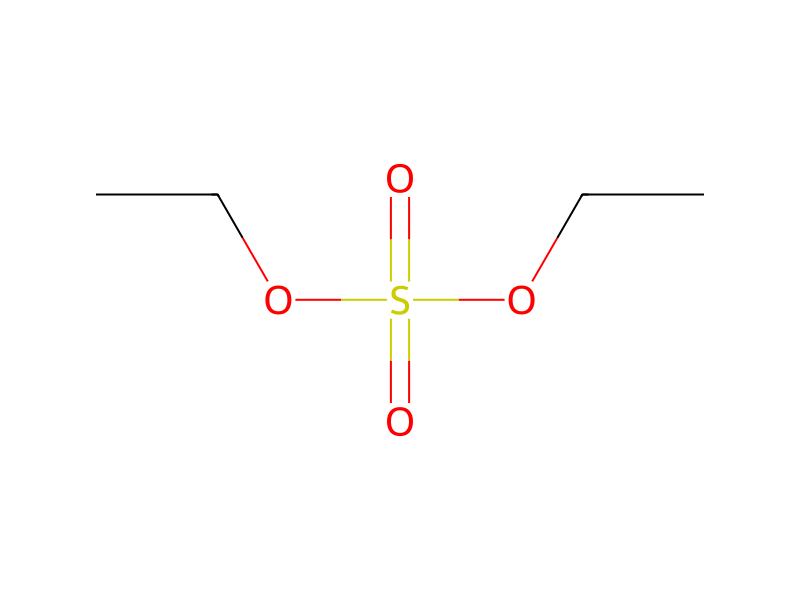
[S:1]([O:7][CH2:8][CH3:9])([O:4][CH2:5]C)(=[O:3])=[O:2].C[C:11]1[NH:12][CH:13]=[CH:14][N:15]=1.[CH2:16](O)[CH2:17][CH2:18][CH2:19][CH2:20][CH2:21][CH2:22][CH3:23]>C(O)C>[CH2:8]([O:7][S:1]([O-:4])(=[O:2])=[O:3])[CH2:9][CH2:16][CH2:17][CH2:18][CH2:19][CH2:20][CH3:21].[CH2:13]([N+:12]1[CH:23]=[CH:22][N:15]([CH3:14])[CH:11]=1)[CH3:5]Participants
Reactant 3


Product 1

Reagents, catalysts & solvents 1

Procedure
In a 250 ml Schlenk flask, 58.75 g (0.381 moles) of diethyl sulfate was slowly added dropwise to 31.28 g (0.381 moles) of methylimidazole with ice cooling and under a blanket gas. Stirring of the mixture was continued at room temperature over night. After the addition of 62.72 g (0.482 moles; 1.26 equ.) of 1-octanol and 0.67 g of Lewatite K-2629 washed with acetone and dried under high vacuum (acidic ion-exchanger), the mixture was allowed to react over night at 140° C., and at the same time, the by-product ethanol formed was removed from the reaction mixture by sparging with an argon stream. The remaining volatile fractions were subsequently removed under high vacuum at 80° C. The product, 1-ethyl-3-methylimidazolium 1-octyl sulfate, was obtained as a medium-viscous, slightly yellow liquid in quantitative yield.
Workup
- waitwas continued at room temperature over night
- washwashed with acetone
- customdried under high vacuum (acidic ion-exchanger)
- customto react over night at 140° C.
- customwas removed from the reaction mixture
- customby sparging with an argon stream
- customThe remaining volatile fractions were subsequently removed under high vacuum at 80° C
Sources & evidence
- ORD record
- ord-8754e54cf081402da3a660cc3b2305bb
- Source dataset
- uspto-grants-2010_02
- Patent number
- US07655803B2
Reaction notes
Loading…