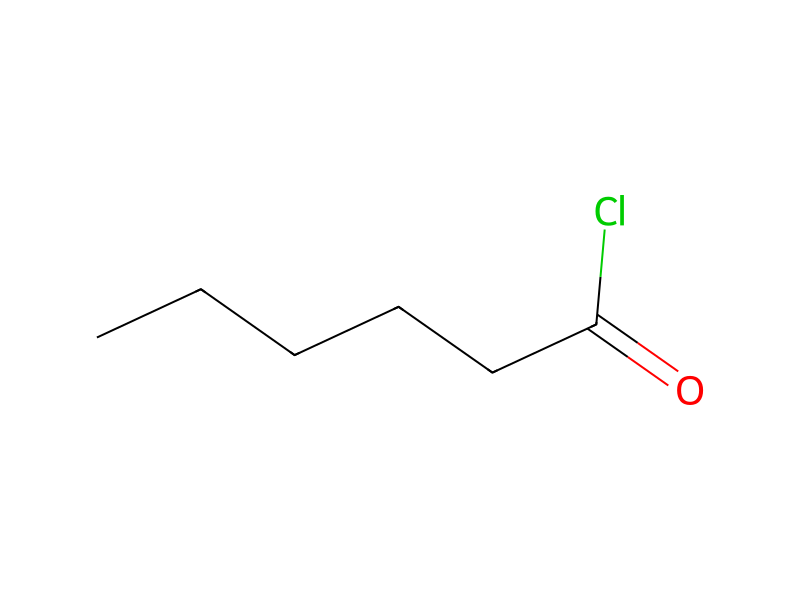
Hexanoyl chloride → HCID 25005968, compound
Reaction equation

[CH:1]1[C:10]2[C:11]3[CH2:17][CH2:16][CH2:15][CH2:14][CH2:13][C:12]=3[N:8]3[C:9]=2[C:4]([CH2:5][CH2:6][CH2:7]3)=[CH:3][C:2]=1[NH2:18].[C:19](Cl)(=[O:25])[CH2:20][CH2:21][CH2:22][CH2:23][CH3:24]>ClCCl>[CH:1]1[C:10]2[C:11]3[CH2:17][CH2:16][CH2:15][CH2:14][CH2:13][C:12]=3[N:8]3[C:9]=2[C:4]([CH2:5][CH2:6][CH2:7]3)=[CH:3][C:2]=1[NH:18][C:19](=[O:25])[CH2:20][CH2:21][CH2:22][CH2:23][CH3:24]Participants
4
Reactant 2

Product 1

Reagents, catalysts & solvents 1

Procedure
Following the procedure in Example 1, Step 4, 5,6,9,10,11,12-hexahydro-4H,8H-cyclohepta[4,5]pyrrolo[3,2,1-ij]quinolin-2-amine (0.12 g, 0.50 mmol), hexanoyl chloride (0.072 mL, 0.52 mmol) and poly-(4-vinylpyridine) (700 mg) in dichloromethane (10 mL) provided 0.14 g of N-5,6,9,10,11,12-hexahydro-4H,8H-cyclohepta[4,5]pyrrolo[3,2,1-ij]quinolin-2-ylhexanamide. MS (ESI) m/z 339;
Sources & evidence
- ORD record
- ord-8986d583c960497783d635159911f64b
- Source dataset
- uspto-grants-2010_02
- Patent number
- US07662831B2
Reaction notes
Loading…