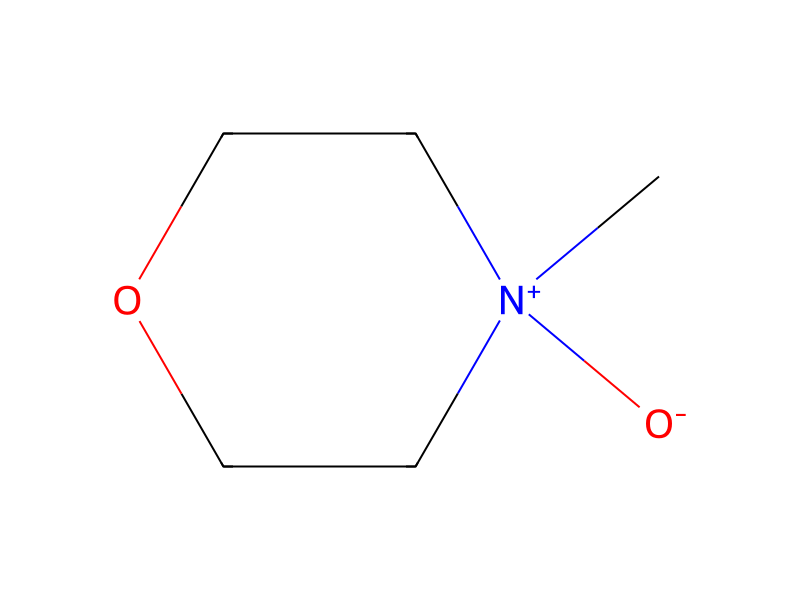
Methyl morpholine oxide → 2-Bromoimidazo[5,1-b]thiazole-7-carbaldehyde
Reaction equation

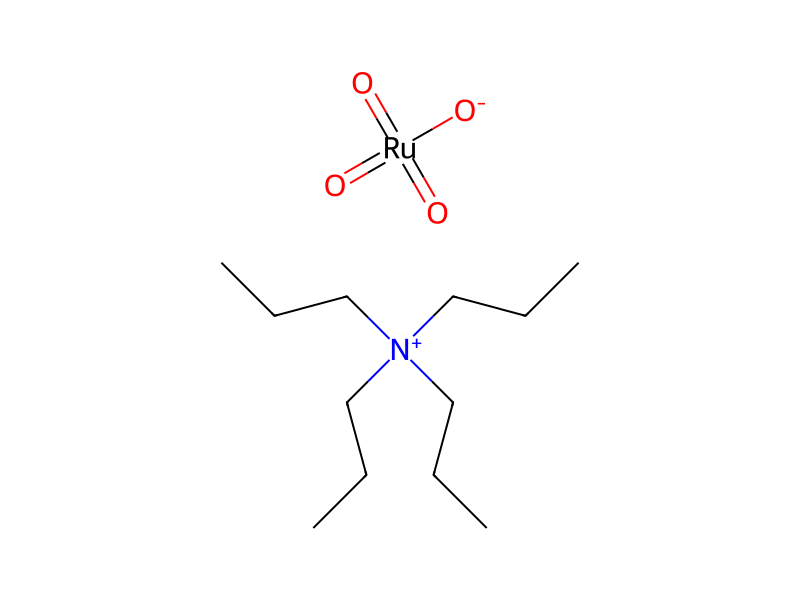
[Br:1][C:2]1[S:6][C:5]2=[C:7]([CH2:10][OH:11])[N:8]=[CH:9][N:4]2[CH:3]=1.C[N+]1([O-])CCOCC1>ClCCl.[Ru]([O-])(=O)(=O)=O.C([N+](CCC)(CCC)CCC)CC>[Br:1][C:2]1[S:6][C:5]2=[C:7]([CH:10]=[O:11])[N:8]=[CH:9][N:4]2[CH:3]=1Participants
5



Procedure
Dried 4A molecular sieves (40 mg) and tetra-n-propylammonium perruthenate (16 mg, 0.05 mmol) were added to a solution of 2-bromo-7-hydroxymethylimidazo[5,1-b]thiazole (53 mg, 0.23 mmol) and N-methylmorpholine-N-oxide (92 mg, 0.79 mmol) in dichloromethane (2 ml), and the mixture was stirred at room temperature for 3 days. The reaction solution was purified by column chromatography on silica gel (ethyl acetate:methanol=60:1) to give 2-bromoimidazo[5,1-b]thiazole-7-carbaldehyde (11 mg, 21%) as a white solid.
Workup
- customThe reaction solution was purified by column chromatography on silica gel (ethyl acetate:methanol=60:1)
Sources & evidence
- ORD record
- ord-26e0f52d712142ab8df2a0f7f16a38df
- Source dataset
- uspto-grants-2010_02
- Patent number
- US07662841B2
Reaction notes
Loading…