Morpholine → 4-(3-Nitro-5-trifluoromethyl-benzoyl)-morpholine
Reaction equation

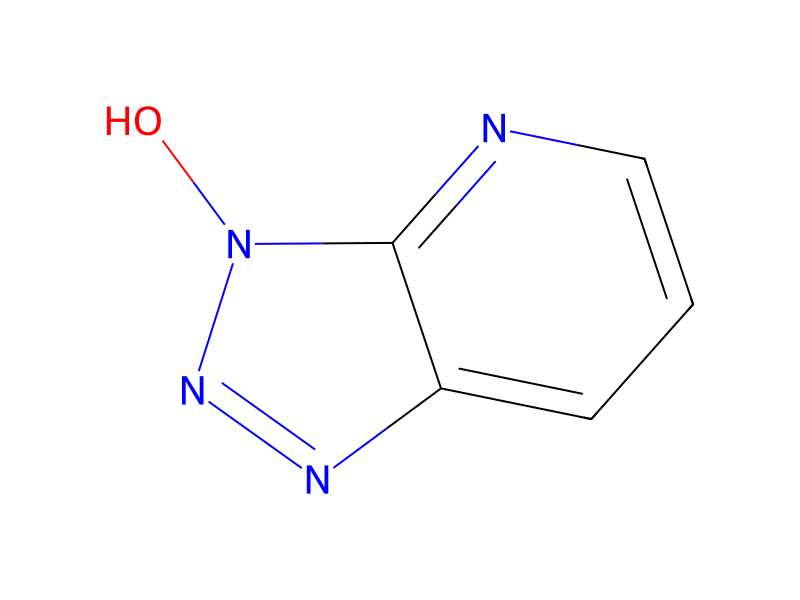
[N+:1]([C:4]1[CH:5]=[C:6]([CH:10]=[C:11]([C:13]([F:16])([F:15])[F:14])[CH:12]=1)[C:7]([OH:9])=O)([O-:3])=[O:2].ON1C2N=CC=CC=2N=N1.C1(N=C=NC2CCCCC2)CCCCC1.[NH:42]1[CH2:47][CH2:46][O:45][CH2:44][CH2:43]1>C1COCC1.C(Cl)Cl>[N:42]1([C:7]([C:6]2[CH:10]=[C:11]([C:13]([F:16])([F:15])[F:14])[CH:12]=[C:4]([N+:1]([O-:3])=[O:2])[CH:5]=2)=[O:9])[CH2:47][CH2:46][O:45][CH2:44][CH2:43]1Participants
7






Procedure
Dissolve 3-nitro-5-trifluoromethyl-benzoic acid (2.9 g, 12.6 mmol) and 1-hydroxy-7-azabenzotriazole (25 mL of 0.5 M solution in DMF) in THF. Add 1,3-dicyclohexylcarbodiimide (2.6 g, 12.6 mmol) and morpholine (1 g, 11 mmol). Stir the mixture for 48-72 hours at room temperature. Dilute the resulting suspension with DCM and quench with saturated aqueous ammonium chloride. Wash the organic layer further by aqueous saturated sodium chloride and water, dry (MgSO4) and concentrate to a yellow-white residue. Purify by silica gel column chromatography, with a gradient from 100% hexane to 50% hexane in ethyl acetate, yielding the title compound as 2.5 g white solid (75% yield). LCMS (ES), m/z 305 (M+1).
Workup
- customquench with saturated aqueous ammonium chloride
- washWash the organic layer further by aqueous saturated sodium chloride and water
- dry with materialdry (MgSO4)
- concentrationconcentrate to a yellow-white residue
- customPurify by silica gel column chromatography, with a gradient from 100% hexane to 50% hexane in ethyl acetate
Sources & evidence
- ORD record
- ord-99377fc845c94ae491c48df1e4602492
- Source dataset
- uspto-grants-2010_02
- Patent number
- US07666879B2
Reaction notes
Loading…