Potassium Carbonate → HCID 12895162, compound
Reaction equation

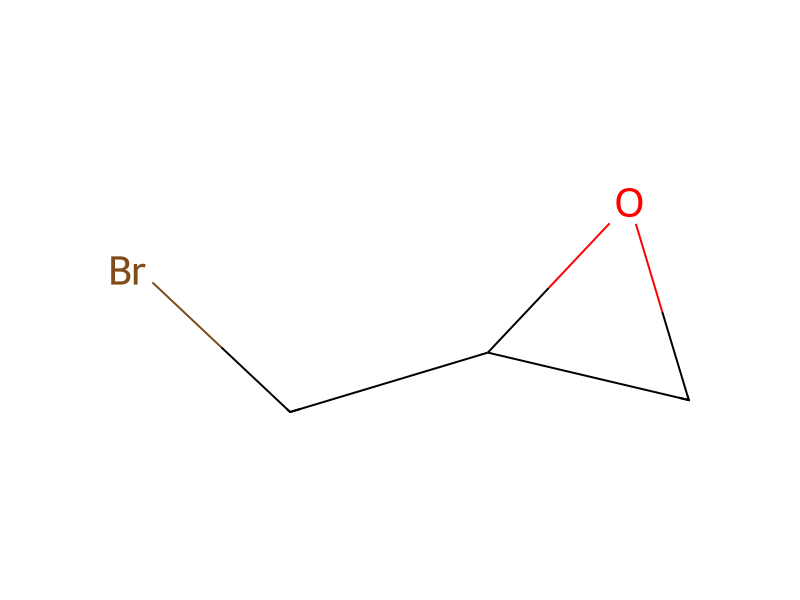
[C:1]([C:6]1[NH:7][C:8]([CH3:13])=[C:9]([CH3:12])[C:10]=1[OH:11])([O:3][CH2:4][CH3:5])=[O:2].[CH2:14]([CH:16]1[O:18][CH2:17]1)Br.C(=O)([O-])[O-].[K+].[K+]>CC(C)=O>[C:1]([C:6]1[NH:7][C:8]([CH3:13])=[C:9]([CH3:12])[C:10]=1[O:11][CH2:14][CH:16]1[O:18][CH2:17]1)([O:3][CH2:4][CH3:5])=[O:2]Participants
5
Reactant 3


Product 1

Reagents, catalysts & solvents 1

Procedure
100 g of 2-carboethoxy-3-hydroxy-4,5-dimethylpyrrole, 150 g of epibromohydrin and 152 g of dry potassium carbonate in 500 ml of acetone are refluxed for 16 hours. When it has cooled, the entire reaction mixture is poured into 3 liters of ice water, the batch is extracted with ether and the combined extracts are washed with 2 N sodium hydroxide solution and water and dried over sodium sulfate. The evaporation residue which remains after distilling off the ether and the excess epibromohydrin is extracted with heptane. 122 g of 1-(2-carboethoxy-4,5-dimethyl-pyrrol-3-oxy)-2,3-epoxypropane, of melting point 70°-71° C., are obtained.
Workup
- temperatureWhen it has cooled
- customthe entire reaction mixture
- extractionthe batch is extracted with ether
- washthe combined extracts are washed with 2 N sodium hydroxide solution and water
- dry with materialdried over sodium sulfate
- distillationafter distilling off the ether
- extractionthe excess epibromohydrin is extracted with heptane
Sources & evidence
- ORD record
- ord-6d39b682f2004f7bb9b27be5ae2972fe
- Source dataset
- uspto-grants-1982_02
- Patent number
- US04315939
Reaction notes
Loading…