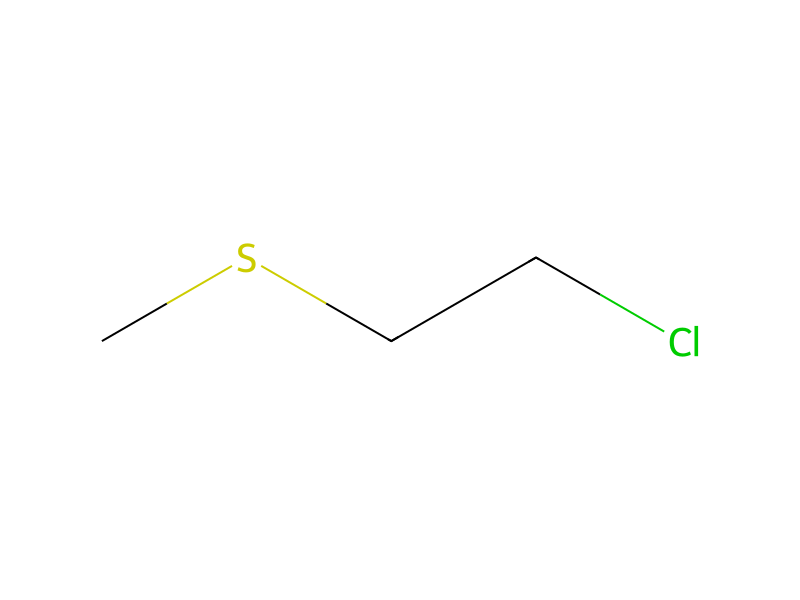
2-Chloroethyl methyl sulfide → 1,3(2H,4H)-Isoquinolinedione, 4,4-dimethyl-2-(2-(methylthio)ethyl)-
Reaction equation

[CH3:1][C:2]1([CH3:14])[C:11]2[C:6](=[CH:7][CH:8]=[CH:9][CH:10]=2)[C:5](=[O:12])[NH:4][C:3]1=[O:13].Cl[CH2:16][CH2:17][S:18][CH3:19]>CN(C)C=O>[CH3:1][C:2]1([CH3:14])[C:11]2[C:6](=[CH:7][CH:8]=[CH:9][CH:10]=2)[C:5](=[O:12])[N:4]([CH2:16][CH2:17][S:18][CH3:19])[C:3]1=[O:13]Participants
4
Reactant 2

Product 1

Reagents, catalysts & solvents 1

Procedure
11.4 gm of potassium tert.butylate were added to a solution of 18 gm of 4,4-dimethyl-2H,4H-isoquinoline-1,3-dione in 70 ml of dimethylformamide, and the mixture was stirred for 5 minutes at room temperature. 11.1 gm of 1-chloro-2-methylmercapto-ethane were then added, and the mixture was heated at 80° C. for 2 hours. After distilling off the dimethylformamide in vacuo, the residue was taken up in chloroform and water. The organic phase was separated and evaporated, and the residue was purified on a silicagel column (eluant: chloroform), yielding 23.1 gm (87.7% of theory) of an oily product which was identified to be the compound of the formula ##STR6##
Workup
- temperaturethe mixture was heated at 80° C. for 2 hours
- distillationAfter distilling off the dimethylformamide in vacuo
- customThe organic phase was separated
- customevaporated
- customthe residue was purified on a silicagel column (eluant: chloroform)
- customyielding 23.1 gm (87.7% of theory) of an oily product which
Sources & evidence
- ORD record
- ord-c2f55e38f75b4526a4fb3f6c3f2f9302
- Source dataset
- uspto-grants-1979_12
- Patent number
- US04179508
Reaction notes
Loading…