Sodium Hydroxide → Sodium Chloride
Reaction equation

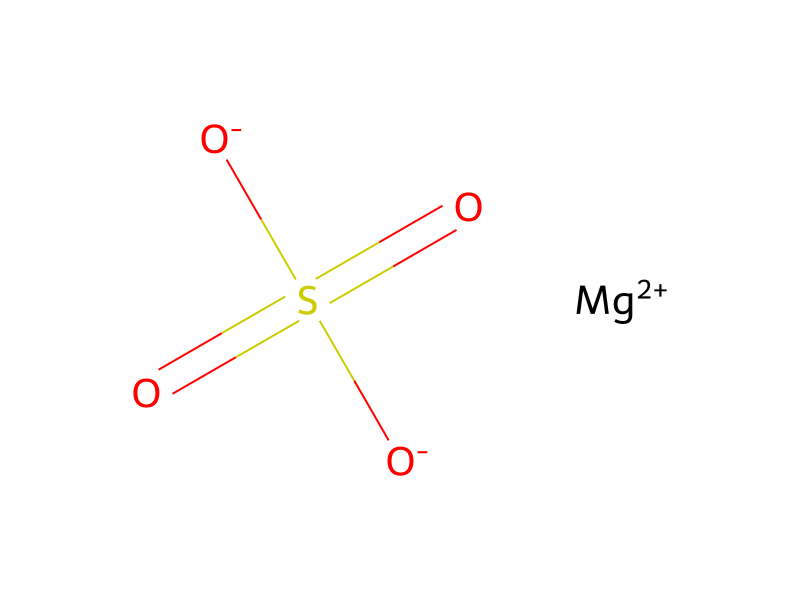
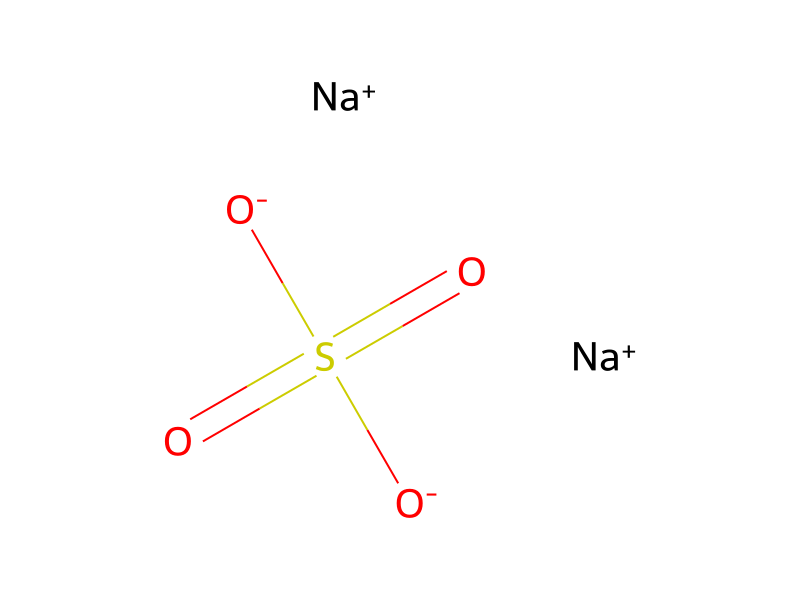
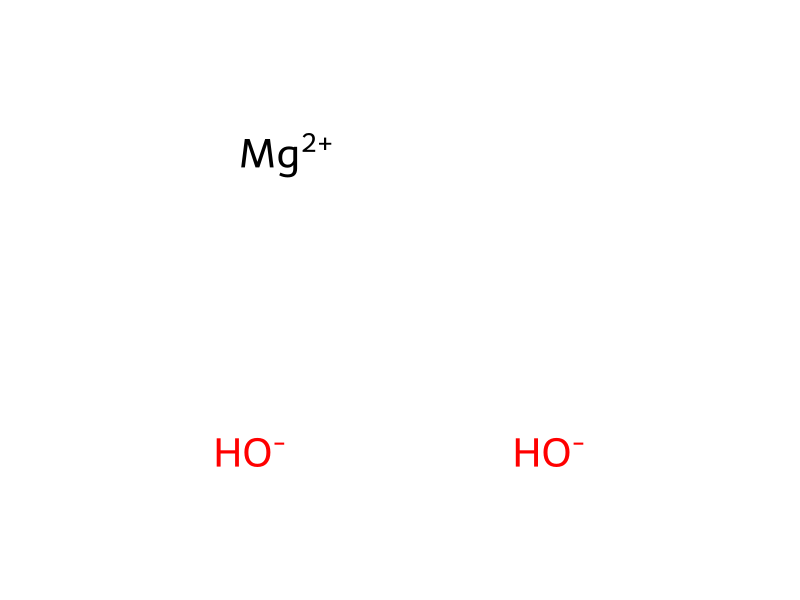
[OH-:1].[Na+:2].[S:3]([O-:7])([O-:6])(=[O:5])=[O:4].[Mg+2:8].[Cl-:9].[Mg+2].[Cl-]>>[Cl-:9].[Na+:2].[S:3]([O-:7])([O-:6])(=[O:5])=[O:4].[Na+:2].[Na+:2].[OH-:1].[Mg+2:8].[OH-:4]Participants



Procedure
A calcium depleted solution 18 is removed from reactor 12 and is introduced to mixer-settler reactor 19. Caustic soda (sodium hydroxide) 20 also is introduced to reactor 19. As with the sodium carbonate used in reactor 12, the sodium hydroxide used in reactor 19 may be produced at another point in the process. In reactor 19, caustic soda 20 reacts with the magnesium sulfate and magnesium chloride in the feed to produce sodium chloride, more sodium sulfate and insoluble magnesium hydroxide. Essentially all of the magnesium hydroxide, about 99% or more, preferably about 99.8% or more, settles out of the solution produced in reactor 19, and it then is removed at 21. The magnesium hydroxide 21 is filtered in filter 22 and calcined in calciner 23 to convert the magnesium hydroxide to magnesium oxide (magnesia). The magnesia, which is one of the commercially valuable products produced by the invention, may be stored in storage bin 24.
Workup
- customA calcium depleted solution 18 is removed from reactor 12
- additionis introduced
- additionCaustic soda (sodium hydroxide) 20 also is introduced to reactor 19
- customAs with the sodium carbonate used in reactor
- custom12, the sodium hydroxide used in reactor
- custom19 may be produced at another point in the process
Sources & evidence
- ORD record
- ord-fdb4e028b59146c48b8dc5a8fd90a6b3
- Source dataset
- uspto-grants-1979_12
- Patent number
- US04180547
Reaction notes
Loading…