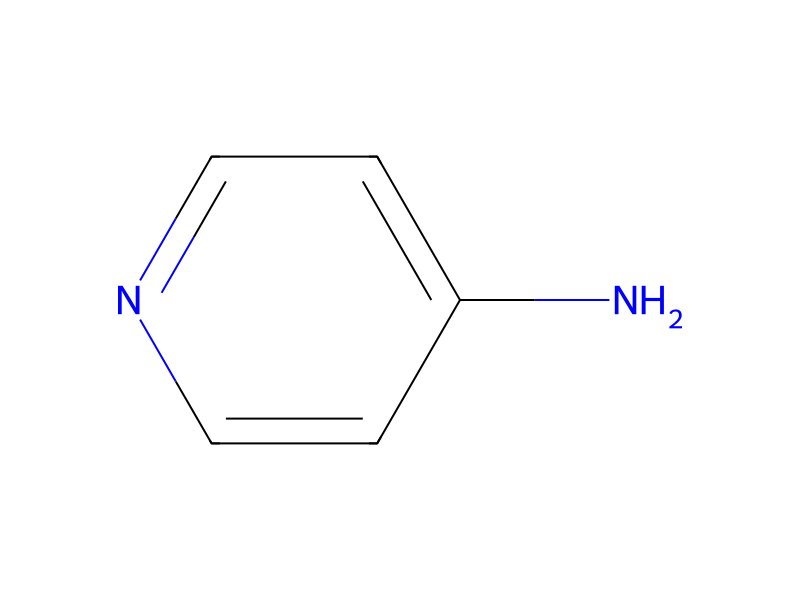
4-Aminopyridine → HCID 20380322, compound
Reaction equation

[C:1]1([CH:7]([C:9]2[CH:14]=[CH:13][CH:12]=[CH:11][CH:10]=2)Br)[CH:6]=[CH:5][CH:4]=[CH:3][CH:2]=1.[NH2:15][C:16]1[CH:21]=[CH:20][N:19]=[CH:18][CH:17]=1>C1(C)C=CC=CC=1>[C:1]1([CH:7]([C:9]2[CH:14]=[CH:13][CH:12]=[CH:11][CH:10]=2)[NH:15][C:16]2[CH:21]=[CH:20][N:19]=[CH:18][CH:17]=2)[CH:6]=[CH:5][CH:4]=[CH:3][CH:2]=1Participants
Reactant 2

Product 1

Reagents, catalysts & solvents 1

Procedure
24.7 Grams (0.1 mole) of diphenylbromomethane and 29.4 grams (0.3 mole) of 4-aminopyridine in 500 milliliters of toluene were heated under reflux with stirring for 20 hours. The solid formed was filtered off and the toluene was extracted with 2 N hydrochloric acid. The acid extracts were combined with the solid material and the solid was taken into solution by the addition of water and methanol. The alcoholic solution was basified with 5 N sodium hydroxide and extracted with toluene. After drying over magnesium sulphate, the solvent was removed and 8.01 grams of the title compound were obtained as the crude crystalline base, m.p. 148°-50° C. The base was converted into its hydrochloride by solution in the minimum quantity of 2-propanol and addition of a solution of hydrogen chloride in dry ether. The hydrochloride was obtained as a colourless solid, m.p. 237°-9° C.
Workup
- temperatureunder reflux
- customThe solid formed
- filtrationwas filtered off
- extractionthe toluene was extracted with 2 N hydrochloric acid
- additionthe solid was taken into solution by the addition of water and methanol
- extractionextracted with toluene
- dry with materialAfter drying over magnesium sulphate
- customthe solvent was removed
Sources & evidence
- ORD record
- ord-29281a9656c24f34ab617281fdcd6aff
- Source dataset
- uspto-grants-1979_12
- Patent number
- US04180670
Reaction notes
Loading…