Triethylamine → HCID 53771859, compound
Reaction equation

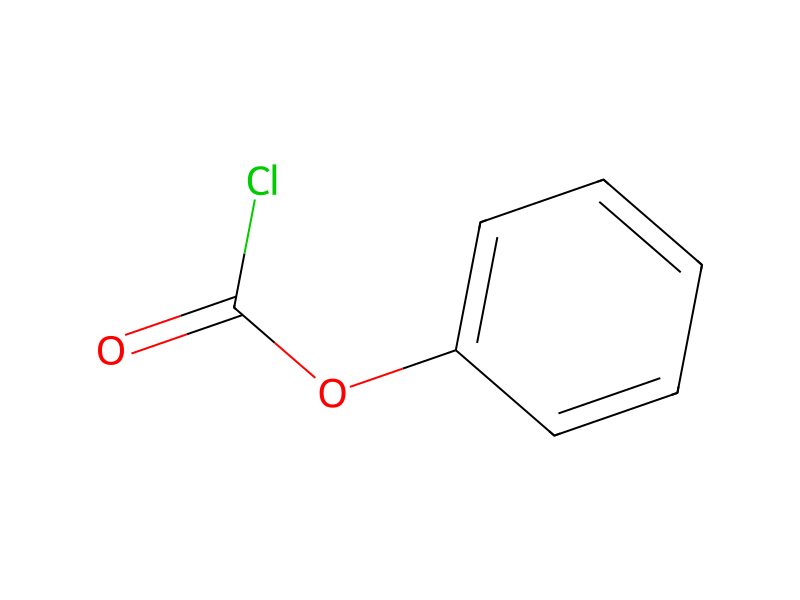
[Cl:1][C:2]1[N:3]=[C:4]([C:8]([F:11])([F:10])[F:9])[NH:5][C:6]=1[Cl:7].C(N(CC)CC)C.[C:19]1([O:25][C:26](Cl)=[O:27])[CH:24]=[CH:23][CH:22]=[CH:21][CH:20]=1>O1CCOCC1>[C:19]1([O:25][C:26]([N:5]2[C:6]([Cl:7])=[C:2]([Cl:1])[N:3]=[C:4]2[C:8]([F:11])([F:10])[F:9])=[O:27])[CH:24]=[CH:23][CH:22]=[CH:21][CH:20]=1Participants
5
Reactant 3


Product 1

Reagents, catalysts & solvents 1

Procedure
20.5 g (0.1 mol) of 4,5-dichloro-2-trifluoromethyl-imidazole were dissolved in 150 ml of dioxane. 10.1 g (0.1 mol) of triethylamine were added thereto and 16.05 g (0.1 mol) of chloroformic acid phenyl ester were then added dropwise whilst cooling at 10°-15° C. The mixture was stirred for a further 2 hours at room temperature, the triethylamine hydrochloride which had separated out was filtered off and the filtrate was evaporated in vacuo. The oily residue was distilled. The main fraction boiled at 106.5°-107° C./0.08 mm Hg. 28.6 g (88% of theory) of 4,5-dichloro-2-trifluoromethyl-imidazole-1-carboxylic acid phenyl ester were obtained.
Workup
- temperaturewhilst cooling at 10°-15° C
- customthe triethylamine hydrochloride which had separated out
- filtrationwas filtered off
- customthe filtrate was evaporated in vacuo
- distillationThe oily residue was distilled
Sources & evidence
- ORD record
- ord-a4111691d9ef43298b43830a05804a29
- Source dataset
- uspto-grants-1980_02
- Patent number
- US04187100
Reaction notes
Loading…