Dimethyl Sulfoxide → N,N'-Dicyclohexylurea
Reaction equation

BrC1C=CC([O:6]CC(O)C)=CC=1.CS(C)=O.[CH:17]1([N:23]=[C:24]=[N:25][CH:26]2[CH2:31][CH2:30][CH2:29][CH2:28][CH2:27]2)[CH2:22][CH2:21][CH2:20][CH2:19][CH2:18]1.FC(F)(F)C(O)=O.C(O)(=O)C(O)=O>CCOCC.CO.N1C=CC=CC=1>[CH:26]1([NH:25][C:24](=[O:6])[NH:23][CH:17]2[CH2:18][CH2:19][CH2:20][CH2:21][CH2:22]2)[CH2:31][CH2:30][CH2:29][CH2:28][CH2:27]1Participants
Reactant 5




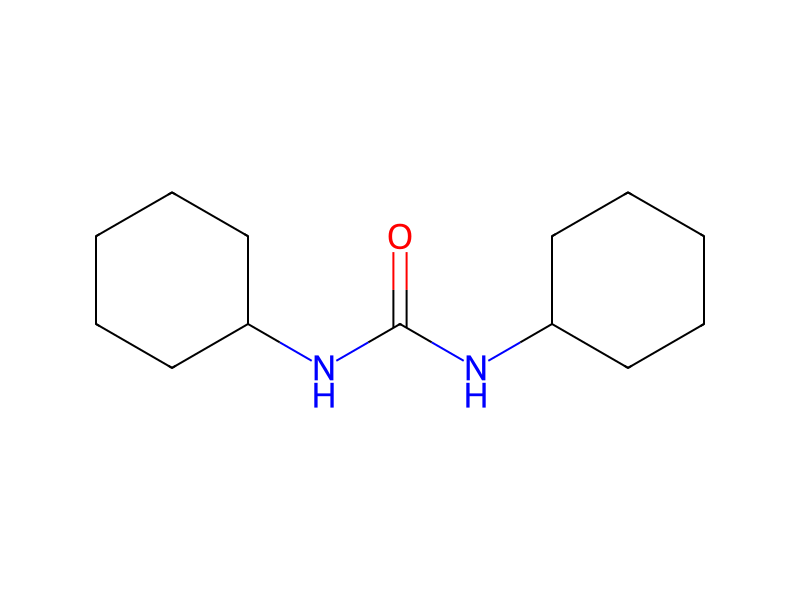
Product 1
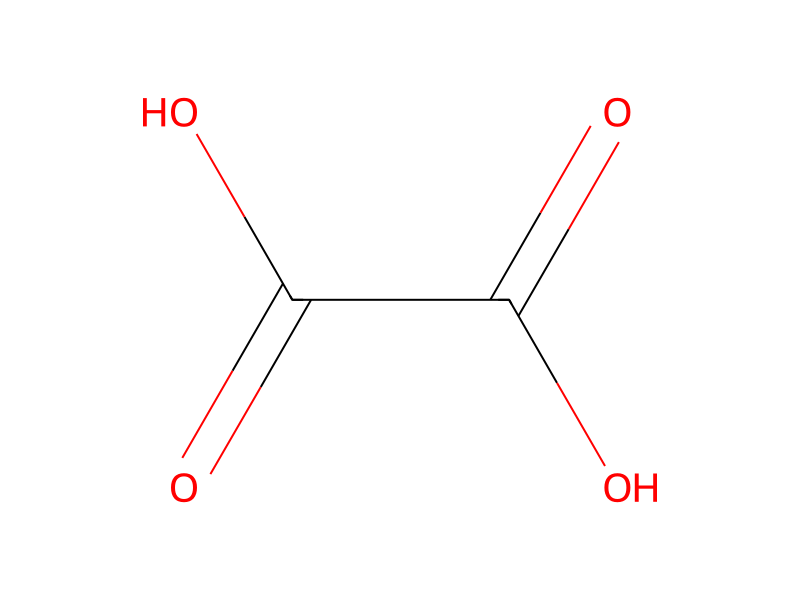
Reagents, catalysts & solvents 3



Procedure
A solution is prepared from 43.35 g (0.1 mol) 3-[2-(2-propinoxycarbonyl)-ethyl]-phenoxy)-1-(4'-bromophenoxy)-propane-2-ol in 500 ml absolute ether and mixed at room temperature with 40 mol dimethylsulfoxide, 7 ml pyridine and 30.95 g (0.15 mol) dicyclohexylcarbodiimide. After adding 5 ml trifluoroacetic acid, the mixture is stirred until no starting compound can be determined through thin-layer chromatographic control. In order to eliminate excessive dicyclohexylcarbodiimide, the reaction mixture is mixed in portions with a solution of 30 g oxalic acid in methanol and stirred for 20 minutes. After the dicyclohexyl-urea precipitate formed is separated, the filtrate is washed with a solution of sodium hydrocarbonate and then with water. The organic phase is dried over sodium sulfate and concentrated in vacuo. The raw product is recrystallized twice. Colorless crystals, melting point 90°-1° C. (isopropanol): yield 37.56 g (87.1%).
Workup
- stirringstirred for 20 minutes
Sources & evidence
- ORD record
- ord-eff7c6053ed04926adfee7db2b787651
- Source dataset
- uspto-grants-1980_02
- Patent number
- US04189594
Reaction notes
Loading…