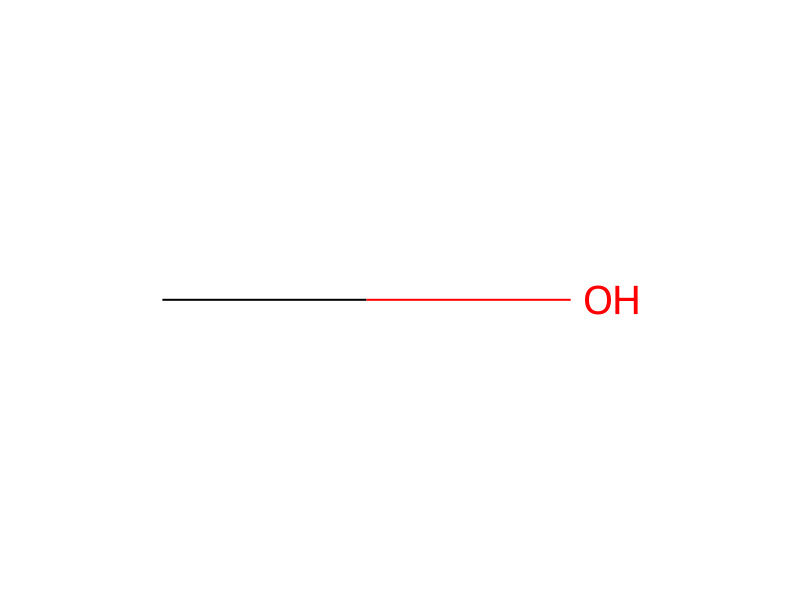
Methanol → Dimethyl hex-3-enedioate
Reaction equation

C=CC=C.[Cl-].[Li+].CO.COC1(OC)CCCCC1.[C:19]([O:29][CH3:30])(=[O:28])[CH2:20]/[CH:21]=[CH:22]/[CH2:23][C:24]([O:26][CH3:27])=[O:25].C(OC)(=O)C=CC=CC(OC)=O.[C]=O.O=O>[Pd](Cl)Cl.[Cu](Cl)Cl.[Mo].[Ni]>[C:24]([O:26][CH3:27])(=[O:25])[CH2:23][CH:22]=[CH:21][CH2:20][C:19]([O:29][CH3:30])=[O:28]Participants
Reactant 8





Product 1

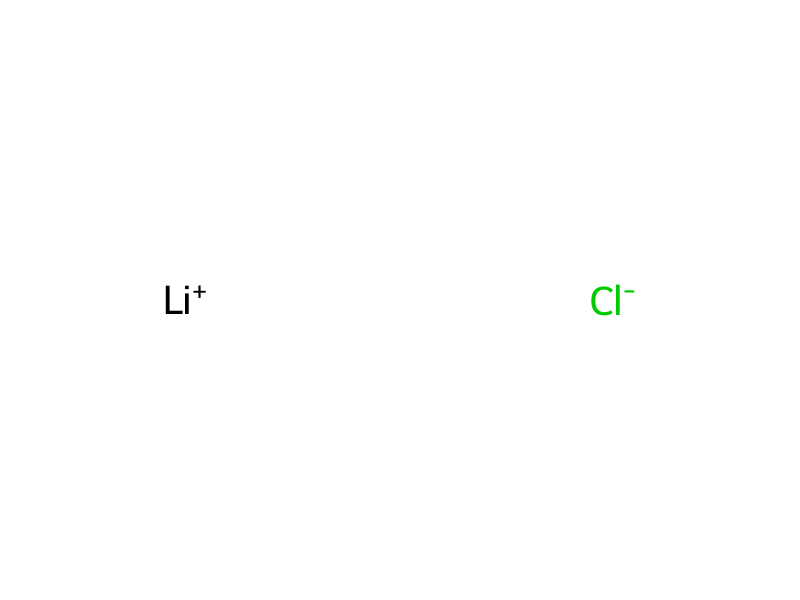
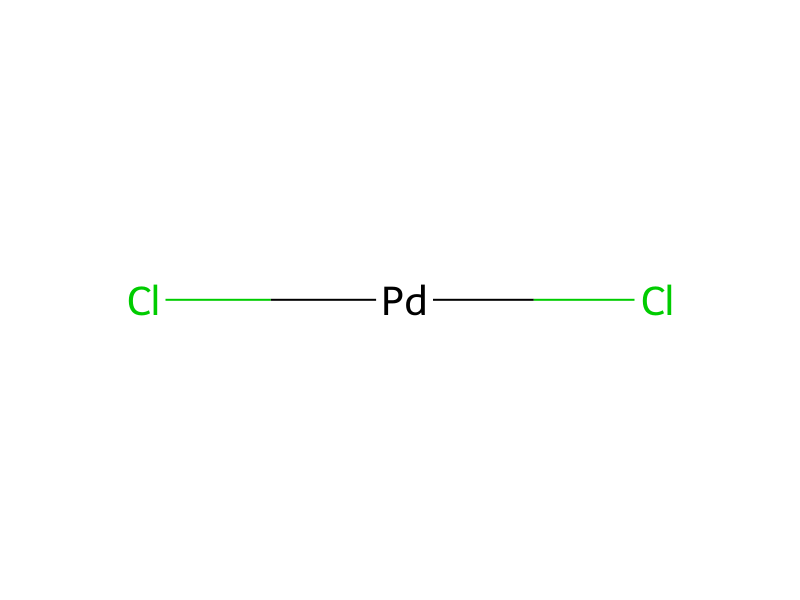
Reagents, catalysts & solvents 3


Procedure
1,3-butadiene (1000 mmoles) along with 0.444 g. (2.5 mmole) palladium (II) chloride, 3.36 g. (25 mmole) copper (II) chloride and 0.21 g. (5 mmole) lithium chloride, 32 mmole of methyl alcohol and 1000 mmole of 1,1-dimethoxycyclohexane was reacted in a 500 ml nickel-molybdenum (Hastelloy alloy) stirred autoclave to prepare a mixture of 41.80 g. (243 mmoles) of cis and trans dimethyl hex-3-endioate, at a trans to cis ratio of 3:1, and 2.04 g. (12 mmoles) of dimethyl hex-2,4-diendioate. The liquid feed and solid catalyst components were charged into the autoclave as homogeneous solutions. The 1,3-butadiene was charged into a sight glass and allowed to come to thermal equilibrium and then charged into the autoclave as a liquid under pressure. The reaction temperature was 100° C. and the total initial carbon monoxide pressure was 1600 psig. The reaction was initiated by a 100 psig charge of oxygen and 1000 psig line purging charge of carbon monoxide giving a total system pressure of 1800 psig. A strong exotherm and pressure drop of 150-200 psig over a course of 20 minutes was observed. The oxygen cycle was repeated five more times in increments of 50 psig oxygen and 100 psig carbon monoxide at intervals of 20 minutes during an autoclave residence period of 120 minutes. A total pressure drop of about 1000 psig was observed. The reaction was terminated before completion and cooled to ambient temperature and vented to ambient pressure. Solids were separated from liquids by vacuum filtration. The 1,3-butadiene conversion and selectivities to the dimethyl hex-3-endioate based on the butadiene was 55 percent and 74 mole percent respectively. The dimethyl hex-3-endioate was isolated from the oxidative carbonylation reaction mixture by fractional vacuum distillation and analyzed by gas liquid chromatography (Fraction b.p. 123° C. @ 9 mm Hg.) for use in a subsequent hydrogenation step to prepare dimethyl adipate. The prefraction (b.p. 67° C. @ 54 mm Hg) containing cyclohexanone, 1-methoxycyclohexene and minor amounts of unreacted 1,1-dimethoxycyclohexane was cycled to a regeneration step for subsequent use in further oxidative carbonylation reactions. The pot residue from the oxidative carbonylation reaction containing a very small amount of dimethyl hex-3-endioate product heal and a slurry containing approximately 99.9 percent of the original charged palladium (II) chloride/copper (II) chloride and lithium chloride carbonylation catalyst mixture was recycled for use in a subsequent second pass 1,3-butadiene oxidative carbonylation reaction.
Workup
- customto prepare
- additiona mixture of 41.80 g
- additionThe liquid feed and solid catalyst components were charged into the autoclave as homogeneous solutions
- additioncharged into the autoclave as a liquid under pressure
- customwas 100° C.
- custompurging
- additioncharge of carbon monoxide giving a total system pressure of 1800 psig
- customover a course of 20 minutes
- customat intervals of 20 minutes
- customduring an autoclave residence period of 120 minutes
- customThe reaction was terminated before completion
- customSolids were separated from liquids by vacuum filtration
Sources & evidence
- ORD record
- ord-a3e9d6019c4f44ada357c9a7e909ac0f
- Source dataset
- uspto-grants-1980_02
- Patent number
- US04189599
Reaction notes
Loading…