Pyridine → Naphthalene
Reaction equation

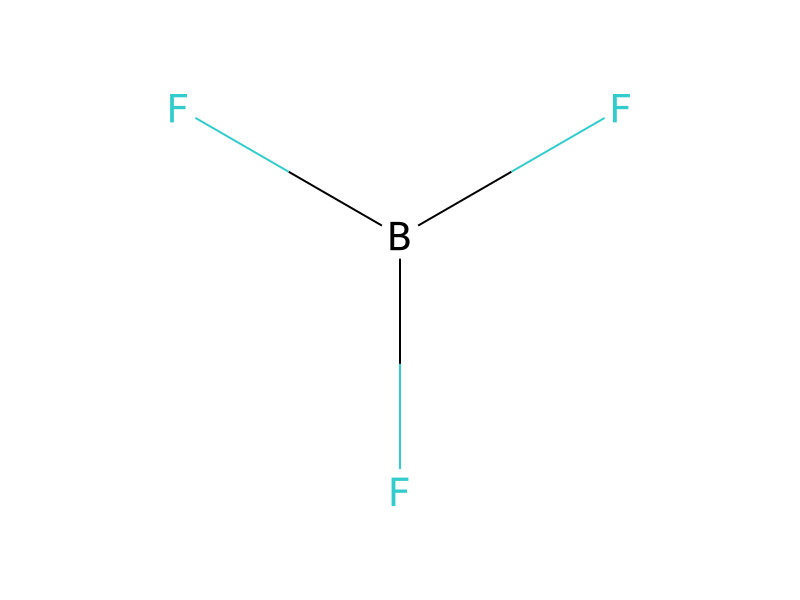
N1[C:10]2[C:5](=[CH:6][CH:7]=[CH:8][CH:9]=2)[CH:4]=[CH:3][CH:2]=1.N1C=CC=C[CH:12]=1>B(F)(F)F>[CH:4]1[C:5]2[C:10](=[CH:9][CH:8]=[CH:7][CH:6]=2)[CH:12]=[CH:2][CH:3]=1Participants
Reactant 2


Product 1

Reagents, catalysts & solvents 1
Procedure
Naphthalene was polymerized at a temperature of from 200° to 400° C. in the presence of a HF.BF3 catalyst to obtain a pitch which has an optical anisotropy of 100 volume % as observed under a polarization microscope, an optically anisotropic structure of a "rough flow type", a glass transition temperature width (ΔTg) of 52° C., a quinoline-insoluble content of 18.5% by weight, a Mettler softening point of 250° C. and an elemental composition as analyzed of C: 94.8 wt% and H: 5.2 wt%. This pitch was finely pulverized. Then, 200 ml of pyridine was added to 5 g of this pitch, and extraction was conducted at 100° C., followed by filtration with a 0.05 μm membrane filter to remove the pyridine-insoluble matter. Then, from the soluble matter, pyridine was removed to obtain a pyridine-soluble pitch.
Workup
- customa glass transition temperature width (ΔTg) of 52° C.
- customa Mettler softening point of 250° C.
- customwas conducted at 100° C.
- filtrationfollowed by filtration with a 0.05 μm membrane
- filtrationfilter
- customto remove the pyridine-insoluble matter
- customThen, from the soluble matter, pyridine was removed
- customto obtain a pyridine-soluble pitch
Sources & evidence
- ORD record
- ord-6cd679c24030411db990e9f10ccf4573
- Source dataset
- uspto-grants-1997_02
- Patent number
- US05601794
Reaction notes
Loading…