Ethyl bromoacetate → 2,7-Dimethyloctanedioic acid
Reaction equation

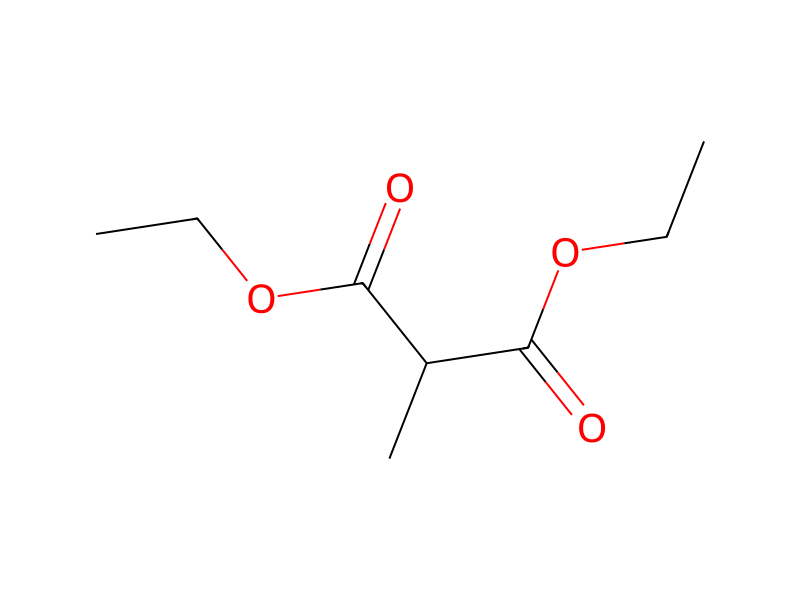
C[CH:2]([CH2:7][CH2:8][CH2:9][CH2:10][CH:11](C)[CH2:12][C:13]([OH:15])=[O:14])CC(O)=O.[CH3:17]C(=O)CCCCC(=O)C.BrC[C:29]([O:31]CC)=[O:30].CC(C(OCC)=O)C(OCC)=O.BrCCCCBr>>[CH3:17][CH:12]([CH2:11][CH2:10][CH2:9][CH2:8][CH:7]([CH3:2])[C:29]([OH:31])=[O:30])[C:13]([OH:15])=[O:14]Participants




Procedure
As processes for synthesizing 3,8- or 3,7-dimethyldecanedioic acid, the following (7) through (9) are known: (7) a process for synthesizing 3,8-dimethyldecanedioic acid, from 2,7-octanedione comprising the five steps of Reformatsky reaction of ethyl bromoacetate, bromination of hydroxyl group, dehydrobromination, hydrogenation of double bond and hydrolysis of ester (see Ann., 580, 125-131 (1953)); (8) a process for synthesizing 3,8-dimethyldecanedioic acid, comprising seven steps starting from malonic condensation of diethyl methylmalonate and 1,4-dibromobutane, followed by hydrolysis and decarboxylation to obtain 2,7-dimethyloctanedioic acid as an intermediate and the subsequent conversion of this intermediate to acid chloride, which is then converted via diazoketone into the intended dicarboxylic acid (see Ann., 598, 1-24 (1956)); (9) a process to obtain 3,7-dimethyldecanedioic acid by hydrogenation of essential oil of Geranium macrorhizum, and subsequent ozonolysis and degradation with perchloric acid (see Chem.listy, 52, 1174-1179 (1958)).
Workup
- customfollowed by hydrolysis and decarboxylation
Sources & evidence
- ORD record
- ord-98183e404e9b4a27b8ecba6ac4b1cad3
- Source dataset
- uspto-grants-1997_02
- Patent number
- US05606005
Reaction notes
Loading…