Phosphoric Acid → Zinc Phosphate
Reaction equation

[O-2].[Zn+2:2].[P:3](=[O:7])([OH:6])([OH:5])[OH:4]>O>[P:3]([O-:7])([O-:6])([O-:5])=[O:4].[Zn+2:2].[P:3]([O-:7])([O-:6])([O-:5])=[O:4].[Zn+2:2].[Zn+2:2]Participants
Reactant 2

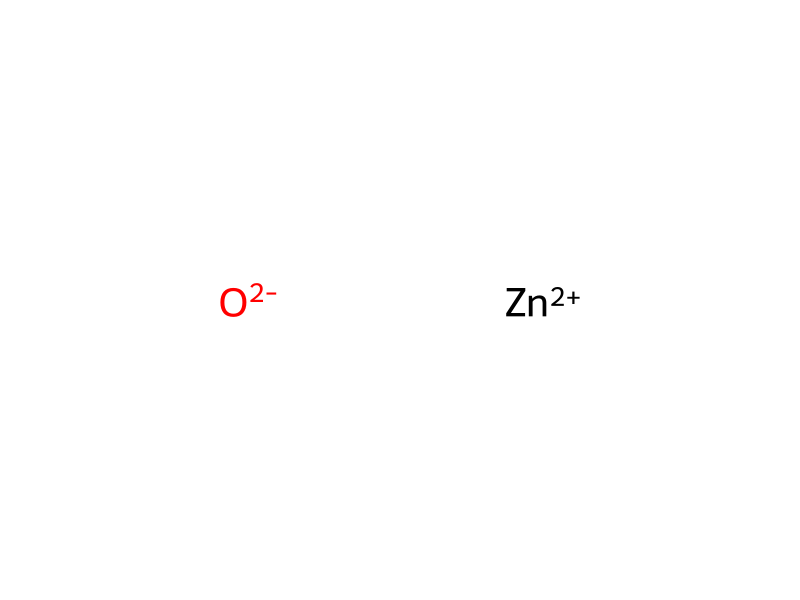
Product 1

Reagents, catalysts & solvents 1

Procedure
An aqueous corrosion inhibitor is created by filling a mixer with approximately 30-75% by total formula weight of water at a temperature between approximately 18-50° C., adding approximately 10-30% by total formula weight of zinc oxide, and then adding approximately 10-30% by total formula weight of phosphoric acid (approximately 75% concentration) to form zinc phosphate. Approximately 1%-95% by total formula weight of hydrotalcite, Mg2xAl2(OH)4x+4CO3*nH2O, with a surface area of approximately 10-400 m2/g is then added. (The higher the surface area, the greater the ion-exchange capacity of the hydrotalcite, the better the corrosion inhibition.) The batch in the mixer is then allowed to mix for approximately ten (10) minutes. The resultant wet slurry is then dried and milled (for example, in an attrition mill) to an average particle size of approximately 1.0-3.0 microns. The corrosion inhibitive pigment created by this process can then be incorporated into a paint.
Workup
- custombetween approximately 18-50° C.
Sources & evidence
- ORD record
- ord-ca9fcea6b691496092190ada4faa2c3b
- Source dataset
- uspto-grants-2009_01
- Patent number
- US07481877B2
Reaction notes
Loading…