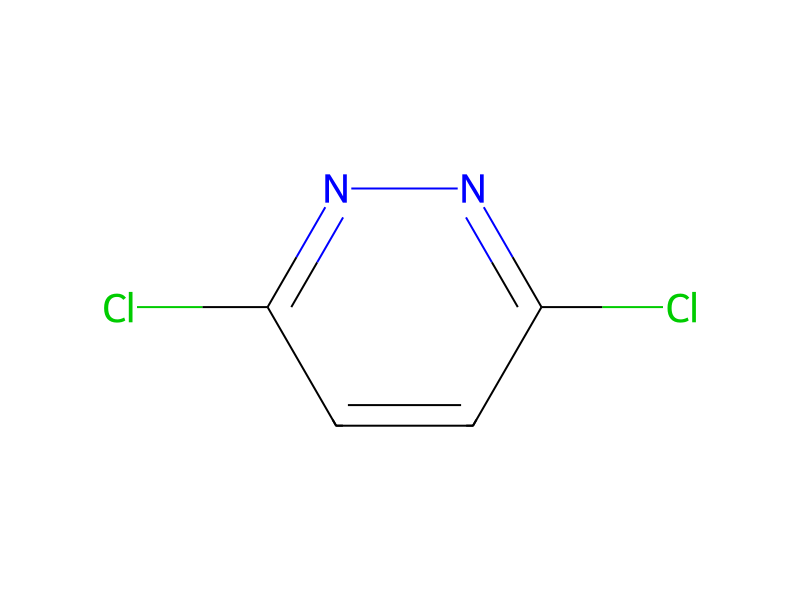
3,6-Dichloropyridazine → 3-Chloro-6-(2,6-difluorobenzyl)pyridazine
Reaction equation

[Cl:1][C:2]1[N:3]=[N:4][C:5](Cl)=[CH:6][CH:7]=1.[Br-].[F:10][C:11]1[CH:18]=[CH:17][CH:16]=[C:15]([F:19])[C:12]=1[CH2:13][Zn+]>C1COCC1.C1C=CC([P]([Pd]([P](C2C=CC=CC=2)(C2C=CC=CC=2)C2C=CC=CC=2)([P](C2C=CC=CC=2)(C2C=CC=CC=2)C2C=CC=CC=2)[P](C2C=CC=CC=2)(C2C=CC=CC=2)C2C=CC=CC=2)(C2C=CC=CC=2)C2C=CC=CC=2)=CC=1>[Cl:1][C:2]1[N:3]=[N:4][C:5]([CH2:13][C:12]2[C:11]([F:10])=[CH:18][CH:17]=[CH:16][C:15]=2[F:19])=[CH:6][CH:7]=1Participants
5




Conditions
- Temperature
- 80 °C
Procedure
To a solution of 3,6-dichloro pyridazine (7.39 g, 50 mmol) and tetrakis(triphenylphosphine)palladium (2.89 g, 2.5 mmol) in THF (500 mL) was added 2,6 difluoro benzyl zinc bromide (120 mL, 60 mmol). The reaction mixture was heated to 80° C. for 1.5 hours until the reaction was complete by TLC. The reaction was cooled to room temperature, filtered through celite, and concentrated in vacuo. The crude residue was recrystalized from ether to yield 5.7 g of the title compound.
Workup
- temperatureThe reaction was cooled to room temperature
- filtrationfiltered through celite
- concentrationconcentrated in vacuo
- customThe crude residue was recrystalized from ether
Sources & evidence
- ORD record
- ord-e439f29fbc714d119ad8d5fca1ddaff8
- Source dataset
- uspto-grants-2009_01
- Patent number
- US07482345B2
Reaction notes
Loading…