Sodium Nitrate → 6-trifluoroacetamido-7-nitro-2,3(1H,4H)-quinoxalinedione
Reaction equation

[F:1][C:2]([F:19])([F:18])[C:3]([NH:5][C:6]1[CH:7]=[C:8]2[C:13](=[CH:14][CH:15]=1)[NH:12][C:11](=[O:16])[C:10](=[O:17])[NH:9]2)=[O:4].[N+:20]([O-])([O-:22])=[O:21].[Na+]>S(=O)(=O)(O)O>[F:19][C:2]([F:1])([F:18])[C:3]([NH:5][C:6]1[CH:7]=[C:8]2[C:13](=[CH:14][C:15]=1[N+:20]([O-:22])=[O:21])[NH:12][C:11](=[O:16])[C:10](=[O:17])[NH:9]2)=[O:4]Participants
4
Reactant 2
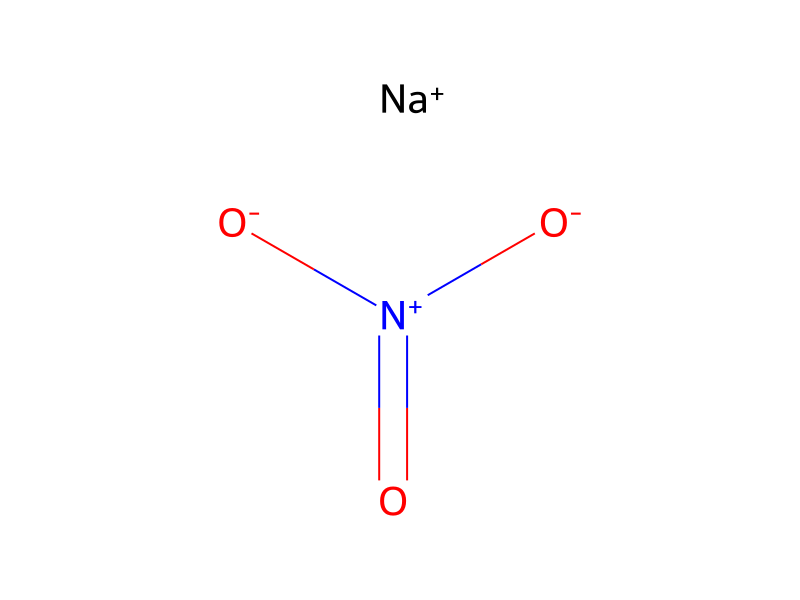

Product 1

Reagents, catalysts & solvents 1

Procedure
A solution of 39 g (0.14 mol) of 6-trifluoroacetamidoquinoxaline -2,3(1H,4H)-dione in 500 ml of concentrated sulfuric acid was cooled to 0° C., 12.1 g (0.14 mol) of sodium nitrate were added in portions, and the mixture was stirred at room temperature for 30 minutes. It was subsequently poured into ice-water and the crude product was filtered off and worked up by conventional methods. Yield: 95%. Melting point >320° C.
Workup
- filtrationthe crude product was filtered off
Sources & evidence
- ORD record
- ord-967b4019b9d241b98597df9958d10da5
- Source dataset
- uspto-grants-1998_12
- Patent number
- US05849743
Reaction notes
Loading…