Methyl Acrylate → Methyl 3-(laurylthio)propionate
Reaction equation

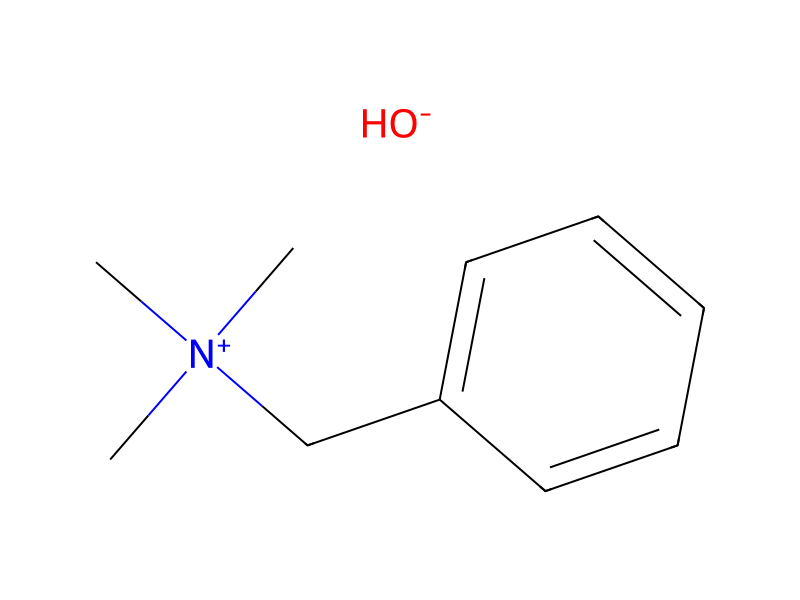
[CH2:1]([SH:13])[CH2:2][CH2:3][CH2:4][CH2:5][CH2:6][CH2:7][CH2:8][CH2:9][CH2:10][CH2:11][CH3:12].[OH-].C([N+](C)(C)C)C1C=CC=CC=1.[CH3:26][O:27][C:28](=[O:31])[CH:29]=[CH2:30]>>[CH2:1]([S:13][CH2:30][CH2:29][C:28]([O:27][CH3:26])=[O:31])[CH2:2][CH2:3][CH2:4][CH2:5][CH2:6][CH2:7][CH2:8][CH2:9][CH2:10][CH2:11][CH3:12]Participants
4



Procedure
Into a 1 liter 3 necked flask equipped with a mechanical stirrer, Claissen adaptor, thermometer and dropping funnel was charged 404 grams of 98% 1-dodecanethiol with stirring to 0.7 grams of Triton B (benzyltrimethyl ammonium hydroxide) and 180.6 grams of 99% methylacrylate. The addition was over a period of 1/2 hour and the temperature of the reaction mixture increased form 30° C. to 56° C. The reaction was stirred an extra hour wherein the temperature dropped from 56° C. to 35° C. The reaction mixture was stripped at 92° C. and 10 mm pressure. 580 grams of product was obtained. Product analysis by GC indicated a purity of 99%.
Workup
- additionThe addition
- temperaturethe temperature of the reaction mixture increased form 30° C. to 56° C
- additiondropped from 56° C. to 35° C
- customwas stripped at 92° C.
Sources & evidence
- ORD record
- ord-444431246af04263a7da56162fea483b
- Source dataset
- uspto-grants-1991_12
- Patent number
- US05069819
Reaction notes
Loading…