Hydrochloric Acid → 3,5-Dibromobenzeneboronic acid
Reaction equation

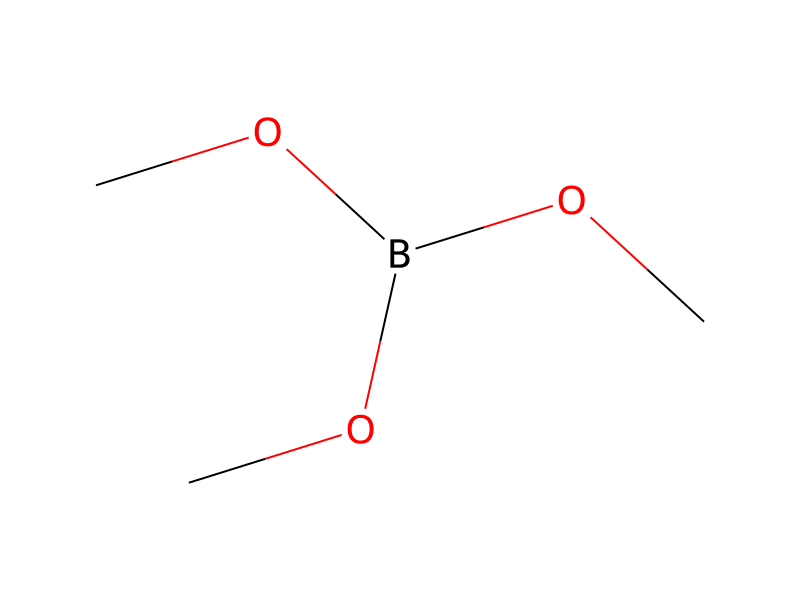
[Br:1][C:2]1[CH:7]=[C:6](Br)[CH:5]=[C:4]([Br:9])[CH:3]=1.C([Li])CCC.[B:15](OC)([O:18]C)[O:16]C.Cl>C(OCC)C.CCCCCC>[Br:1][C:2]1[CH:7]=[C:6]([B:15]([OH:18])[OH:16])[CH:5]=[C:4]([Br:9])[CH:3]=1Participants






Procedure
To 9.44 g of 1,3,5-tribromobenzene in 200 mL of diethyl ether was added 19.4 mL of 1.55 M n-butyllithium in hexane at -78° under nitrogen. The suspension was stirred for 30 min, then added to 30 mL of trimethyl borate in 300 mL of diethyl ether at the same temperature. The now clear solution was stirred at -78° for 30 min then warmed to room temperature overnight. Fifty mL of 1 N hydrochloric acid were added and allowed to react for 2 h. The aqueous layer was discarded and the ether layer was extracted with 2 N sodium hydroxide solution (5 times with 100 mL). The extract was washed once with 50 mL of ether, then acidified with 6N HCl to pH 2 at 0°. A white precipitate was collected by filtration after the solution had been kept at 0° for 2 h. After air drying, 8.49 g (95%) of the title product was obtained. Melting point was >300° and the purity was confirmed by chromatography.
Workup
- stirringThe now clear solution was stirred at -78° for 30 min
- customto react for 2 h
- extractionthe ether layer was extracted with 2 N sodium hydroxide solution (5 times with 100 mL)
- washThe extract was washed once with 50 mL of ether
- customacidified with 6N HCl to pH 2 at 0°
- filtrationA white precipitate was collected by filtration after the solution
- waithad been kept at 0° for 2 h
- customAfter air drying
Sources & evidence
- ORD record
- ord-88d47fdad2f341c1adf60bcdd8a48388
- Source dataset
- uspto-grants-1991_12
- Patent number
- US05070183
Reaction notes
Loading…